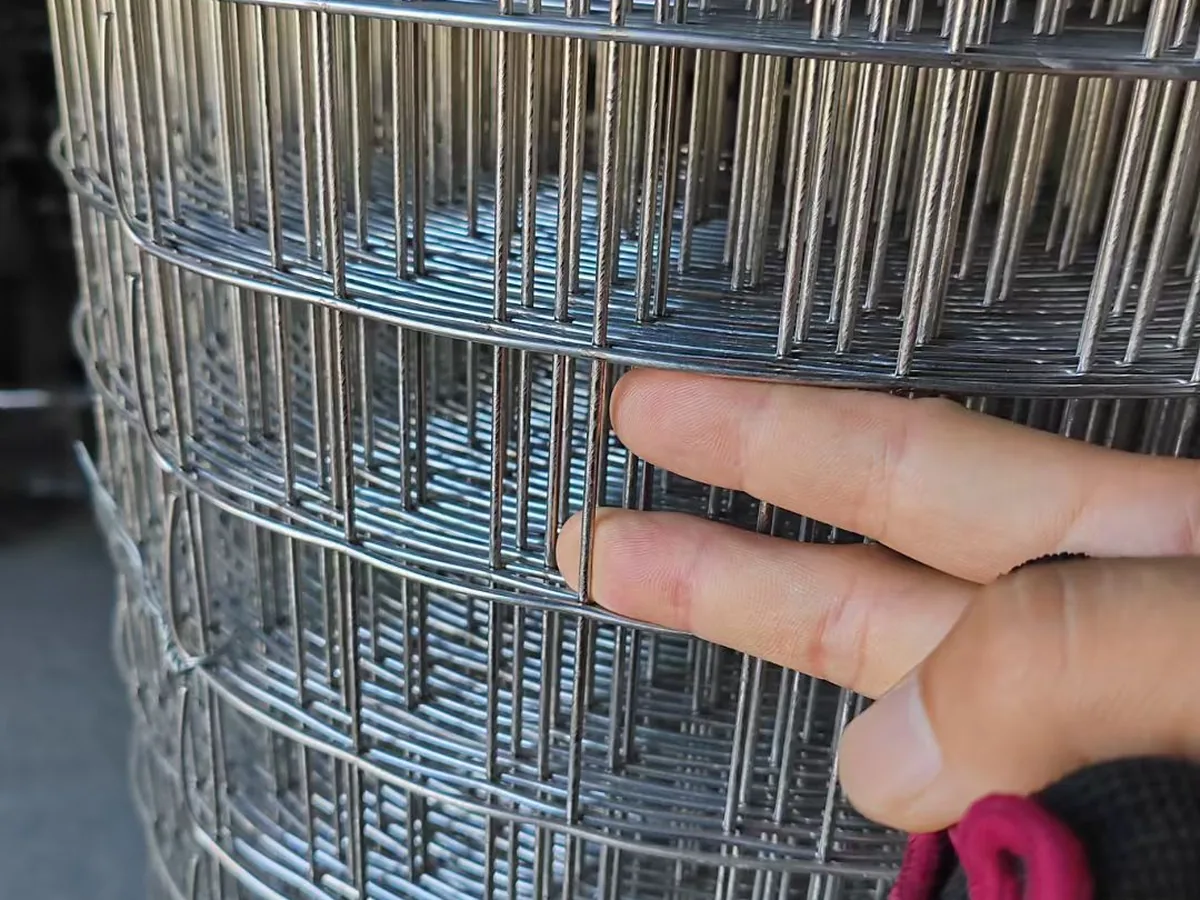
Chemical Plant Protection Wire Mesh | 316L Stainless & Duplex Mesh for Acid, Alkali & Solvent
Anping Hand in Hand factory direct 316 / 316L stainless and duplex 2205 / 2507 wire mesh, welded mesh panels and perforated metal for chemical plant procurement: acid plant, alkali tank, solvent storage, refinery walkway, splash guard, vapor screen, filter housing. Material per ASME B31.3 piping standard, mill test certificate, third-party inspection welcome.
Get my chemical plant 316L mesh quote Send a detailed RFQ
- Material per ASME B31.3 process piping standard for chemical service
- 316L low-carbon stainless for welded chemical fabrications; duplex 2205 for high chloride
- NACE MR0175 H2S service materials available for sour gas environments
- Pickled and passivated surface finish removes free iron, restores chromium passive layer
- Mill test certificate (MTC) traceable to wire batch, full chemical composition
- Third-party inspection by SGS / BV / TUV / Lloyds welcome before B/L issuance
- RFQ replied by named engineer within one business day; full export packing
Recommended products: 316L stainless welded wire mesh manufacturer · 316L mesh panels for chemical fabrication · 316L perforated metal sheet for vapor screen · 316L crimped mesh for filter and sieve.
Why 316L stainless and duplex 2205 for chemical plant procurement
Chemical service material selection is governed by chemistry, temperature and concentration. The four mechanisms below decide grade (316L vs duplex 2205 vs alloy 825 / C-276), surface finish and welding fabrication.
Acid resistance
Sulphuric, hydrochloric and nitric acid attack stainless via pitting and uniform corrosion. 316L resists dilute acid; duplex 2205 needed for concentrated acid above 60 celsius.
Alkali / caustic
50 percent NaOH at room temperature: 316L acceptable. Above 80 celsius or 70 percent: duplex 2205 or nickel alloy 600 / 625 required.
Solvent and chloride
Organic solvents (alcohol, ester, ketone) compatible with 304/316. Chlorinated solvents (TCE, PCE) require 316L minimum, often duplex.
H2S sour service
NACE MR0175 / ISO 15156 governs material for H2S exposure. Annealed 316L acceptable up to specified hardness; duplex 2205 for sour gas wells.
Material selection guide for chemical plant wire mesh
Engineers select grade by chemical service, temperature, chloride content and stress. Default for atmospheric chemical: 316L pickled and passivated. For concentrated chemical, high temperature or sour service: duplex 2205, super duplex 2507 or nickel alloy. 304 vs 316 stainless welded mesh selection · 304 vs 316 stainless material comparison · surface treatment selection guide · wire mesh buying guide and material comparison.
| Material | Acid resistance | Alkali resistance | Chloride resistance | Typical chemical use |
|---|---|---|---|---|
| 304 stainless | Light dilute only | Up to 50 percent NaOH RT | Avoid above 200 ppm Cl | Indoor utility, low-corrosion |
| 316 stainless | Dilute mineral acids | Up to 50 percent NaOH 60C | Up to 1000 ppm chloride | Refinery walkway, vapor guards |
| 316L stainless | Dilute / welded | Welded fabrication 60C | Welded service to 1000 ppm | Reactor frames, filter housing |
| Duplex 2205 | Concentrated acids | Up to 80 percent NaOH 80C | Brine to 30000 ppm chloride | Heat exchanger, splash zone |
| Super duplex 2507 | Aggressive chemical | High temp caustic | Seawater, brine concentrate | Sour gas, chlor-alkali plant |
| Alloy 825 / C-276 | HCl, H2SO4 hot | Strong oxidizing alkali | High-temp chloride | Specialty hot acid (project) |
Chemical plant application zones
Six standard chemical plant procurement scenarios with recommended product, grade and surface finish, and expected service life. Send the zone plus your chemistry / temperature / pressure spec and our engineer confirms grade and fabrication.
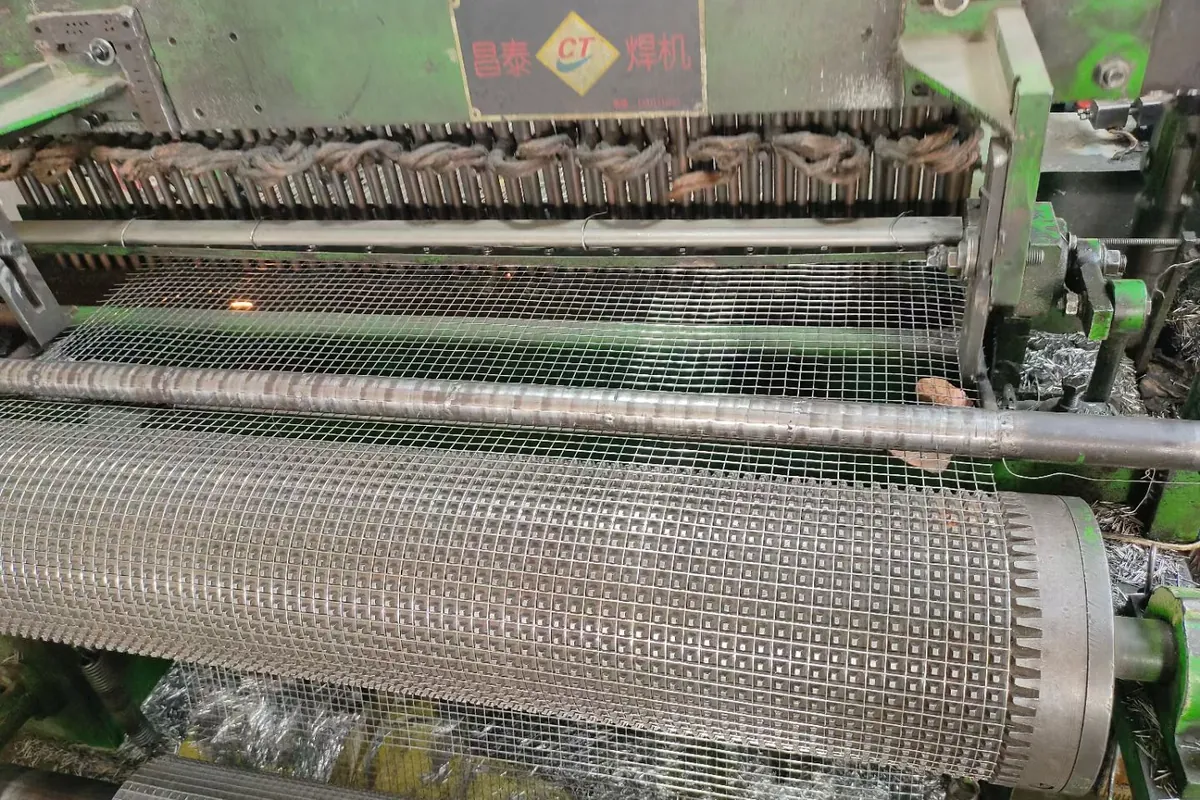
Acid storage tank guard
Recommended: 316L welded mesh panel + perforated metal vent
Spec: 2-3 mm wire, 25-50 mm opening, pickled and passivated finish, framed in 316L flat bar
Bund wall fall protection, vapor screen, splash guard around H2SO4 / HCl / HNO3 tanks. Ventilation perforated insert maintains airflow.
Service life: 15-25 years
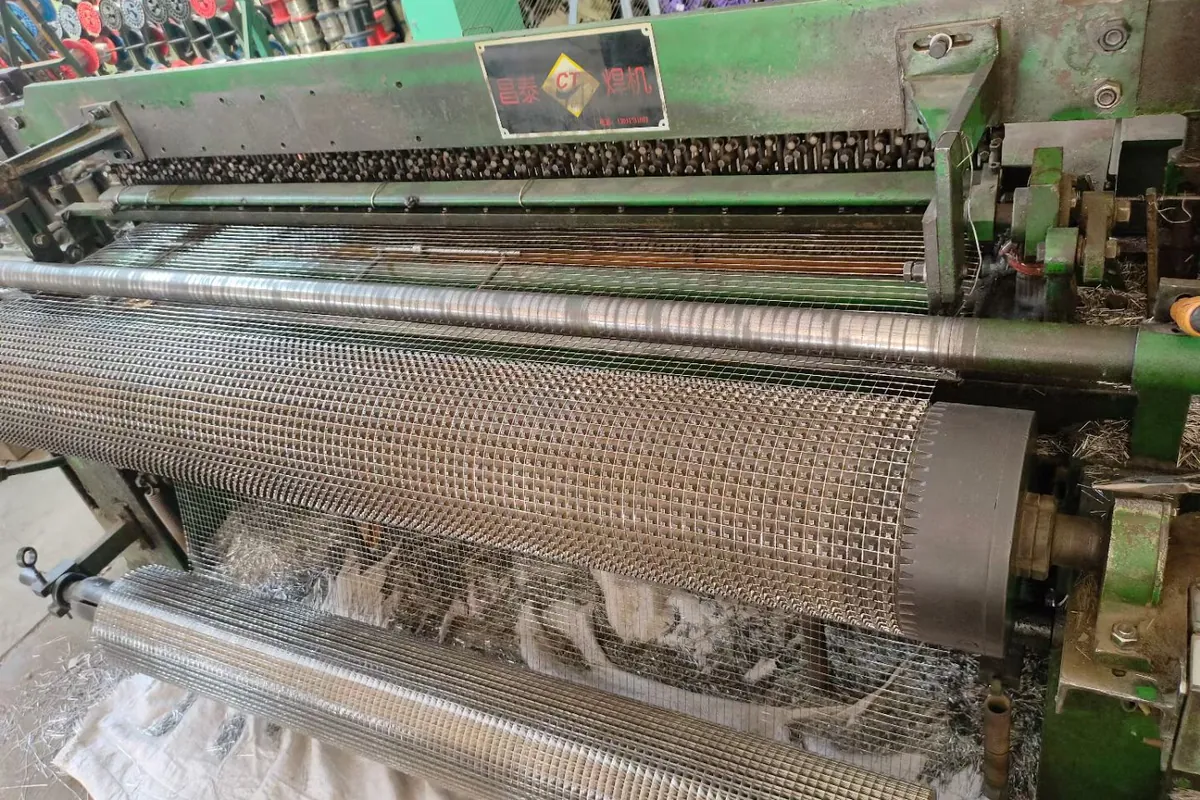
Caustic / NaOH plant
Recommended: 316L or duplex 2205 welded mesh
Spec: 3-4 mm wire, 25-50 mm opening, electro-polished or pickled finish
Caustic spray guards, evaporator deck mesh, mixer cell partition. Duplex 2205 for hot caustic above 80 celsius.
Service life: 20-30 years
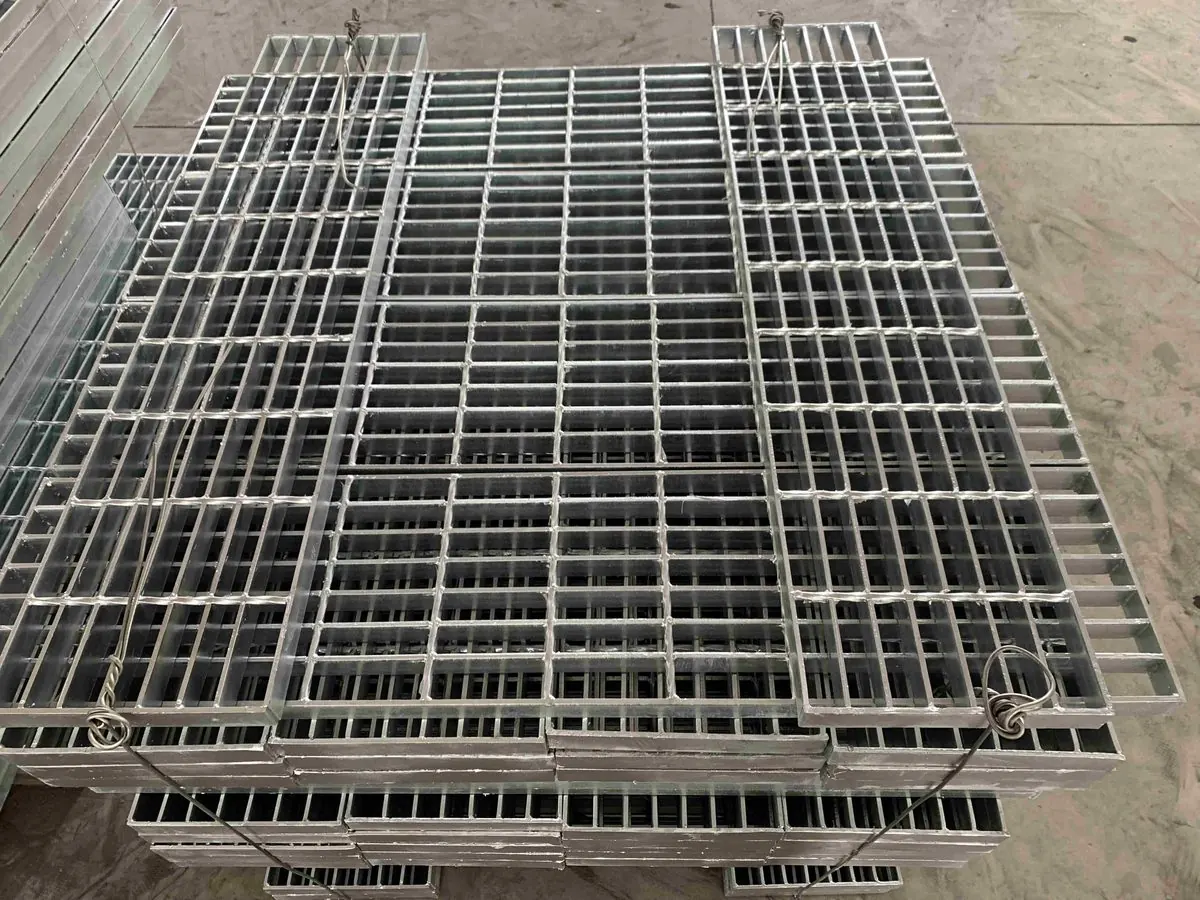
Refinery walkway and platform
Recommended: 316L stainless welded mesh + steel grating
Spec: 3-5 mm wire mesh + 30×3 mm 316L flat bar grating; railing posts integrated
Atmospheric distillation tower walkway, pump deck, cooler maintenance platform. Splash zone for hydrocarbon-water mixtures.
Service life: 20-25 years
Solvent / VOC vapor screen
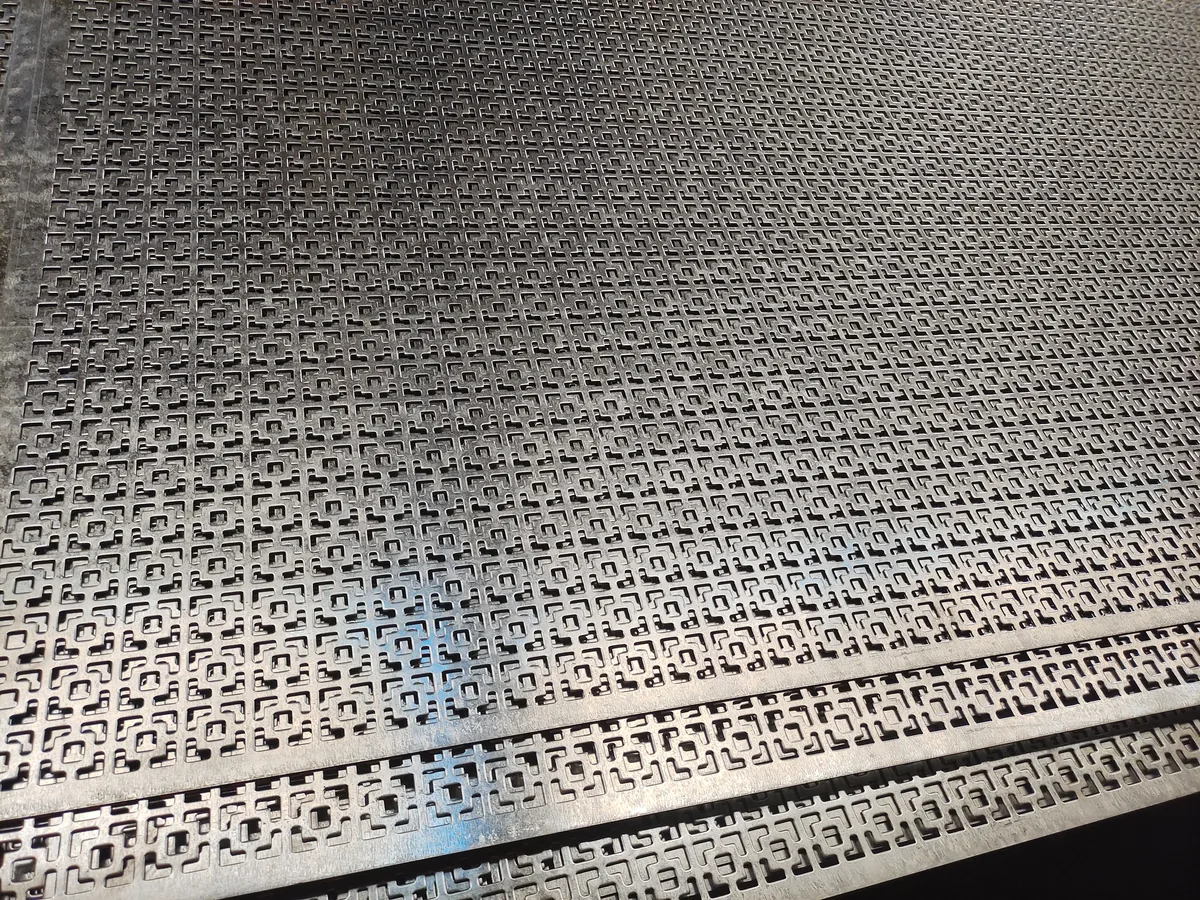
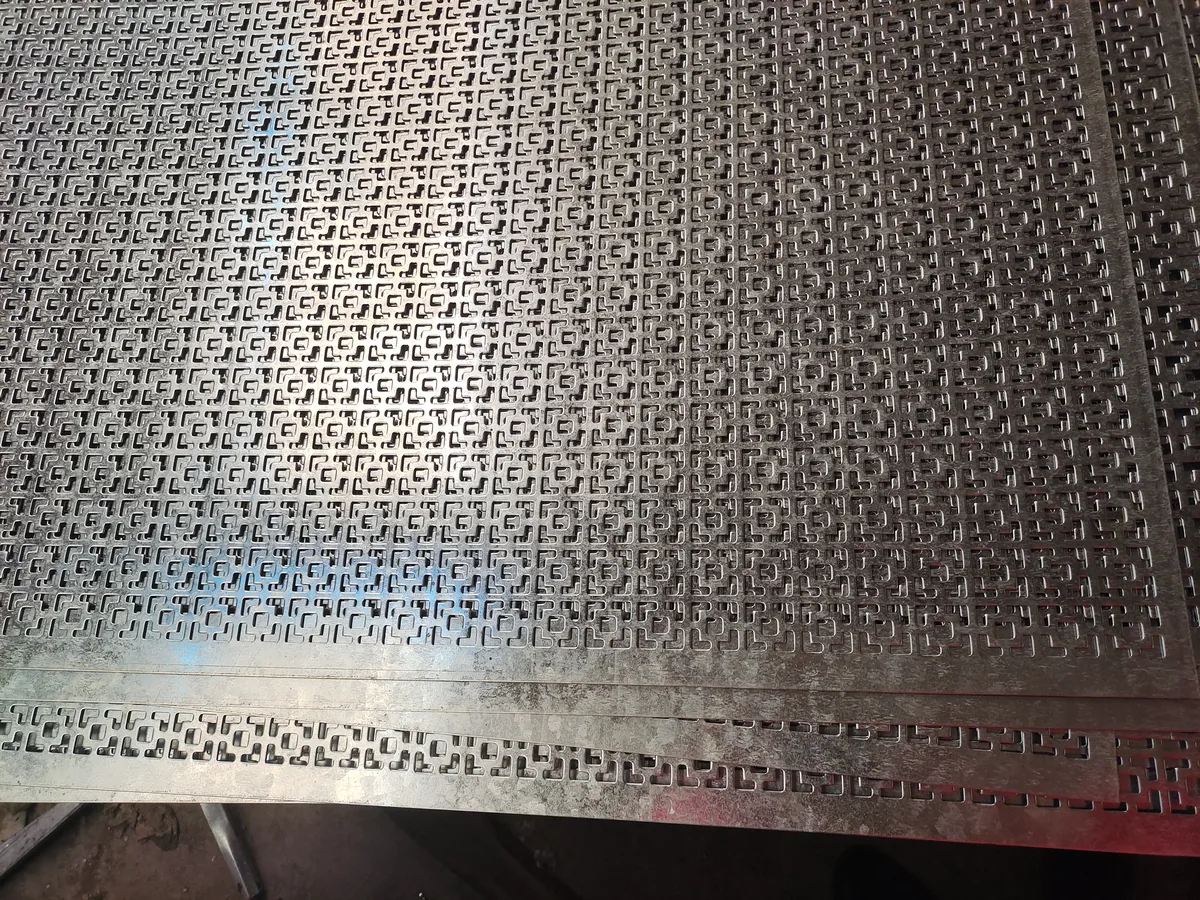
Recommended: 316L perforated metal sheet + welded mesh
Spec: 1.5-2 mm 316L sheet with 3-6 mm round hole 40-50 percent open area
Solvent recovery enclosure, fume hood vent, scrubber inlet screen. Combined containment + airflow for solvent vapor handling.
Service life: 15-20 years
Reactor and filter housing
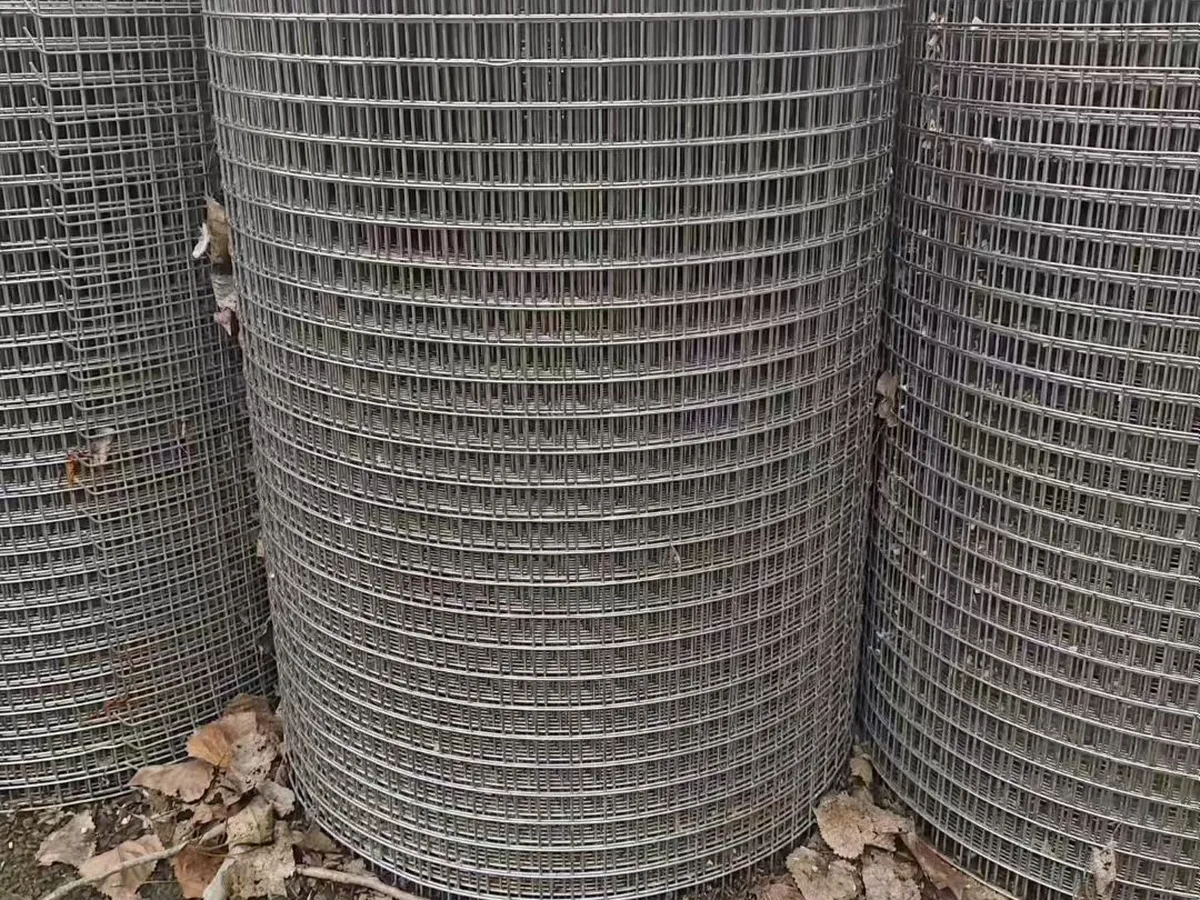
Recommended: 316L / duplex welded mesh panel
Spec: 1-2 mm wire, 6.4-25 mm opening, framed flat panel for cartridge support
Catalyst basket, filter cartridge support, sieve plate for distillation tower. Drawing-driven precision panel fabrication.
Service life: 15-25 years
Chlor-alkali / sour service
Recommended: Duplex 2205 / super duplex 2507
Spec: 2-4 mm wire, 25-50 mm opening, NACE MR0175 H2S compliant material
Brine electrolysis cell guards, sour gas processing platform, chlorine vapor screens. Duplex resists chloride pitting at high temperature.
Service life: 25-30 years
Recommended Anping Hand in Hand products for chemical plant procurement
Each product page covers full specifications, opening size, wire diameter, panel size, and pricing for FOB Tianjin, CIF, DAP and DDP. RFQ is replied within one business day by a named engineer.
- 316L stainless welded wire mesh manufacturer
- 316L mesh panels for chemical fabrication
- 316L perforated metal sheet for vapor screen
- 316L crimped mesh for filter and sieve
Sibling application pages: marine and coastal 316 stainless wire mesh · factory equipment guard mesh selection · farm and aquaculture fencing wire mesh · wire mesh application gallery.
Chemical plant wire mesh procurement FAQ
Common procurement questions answered up front. Bulk wholesale buyers see request a chemical plant mesh quote or contact Anping factory team.
Why use 316L instead of 304 for chemical plant mesh?
316 / 316L contains 2-3 percent molybdenum that resists chloride pitting and crevice corrosion. 304 fails by pitting in any chloride > 200 ppm and is not acceptable for chemical service. 316L (low carbon, < 0.03 percent C) further resists weld-zone sensitization, the marine and chemical default for welded panels.
When is duplex 2205 needed instead of 316L?
Duplex 2205 is required for: 1) concentrated acid above 60 celsius, 2) caustic above 80 celsius / 70 percent NaOH, 3) chloride above 1000 ppm, 4) seawater brine, 5) high-stress + chemical exposure. Compared to 316L, duplex 2205 has roughly 2x yield strength and far better pitting resistance index (PREN ~38 vs 24).
Do you supply NACE MR0175 H2S sour service materials?
Yes. Annealed 316L below specified hardness (HRC 22) acceptable per NACE MR0175 / ISO 15156. Duplex 2205 in solution-annealed condition for sour gas environments. Material certificate includes hardness test result and meets MRO175 chemical composition limits.
What surface finish is best for chemical plant mesh?
Pickled and passivated finish is the chemical service baseline; it removes free iron and weld scale, restoring chromium-rich passive layer. Electro-polished is the highest grade for pharma, food and ultra-pure chemical service. Mill (as-welded) finish is not acceptable for chemical exposure.
Do you supply ASME B31.3 / API material certificates?
Yes. Mill test certificate per EN 10204 type 3.1 by default; type 3.2 (third-party witnessed) on request. ASME B31.3 process piping material compliance, API 5L pipe-grade where applicable, and NACE MR0175 sour service certification all supplied with shipment.
Can you handle drawing-based custom chemical equipment fabrication?
Yes. We cut, frame, weld, pickle, passivate and electro-polish per drawing. Send 2D / 3D / STEP file or P&ID with mesh detail and our engineer quotes material plus fabrication. 316L vs 316 vs duplex grade confirmed against your service spec, temperature and chemistry.
What is the lead time for 316L chemical mesh from China?
Stock 316L mesh roll: 7-12 days; custom framed panels with pickled / electro-polished finish: 15-25 days; duplex 2205 setup: 20-30 days. Sea freight to Europe 30-40 days, North America 25-30 days, Middle East 20-25 days.
What documents are supplied for chemical plant procurement?
EN 10204 3.1 mill test certificate by default (3.2 on request). ASME B31.3 / NACE MR0175 / API material declaration. Third-party SGS / BV / TUV / Lloyds inspection report on request. Container loading photos before B/L; certificate of origin, packing list, B/L, commercial invoice.
What is the MOQ and lead time for chemical plant protection wire mesh?
Low MOQ for stock 316 / 316L welded and woven specs — typically 1 setup batch (about 10-25 panels or a few rolls); custom hole, drawing-based fabrication or duplex 2205 is quoted as a custom batch on request. Lead time: stock 316L specs 10-15 days; custom fabrication or 2205 / NACE sour-service material 20-30 days depending on quantity, surface finish and certification. MOQ and lead time are confirmed in writing on the quotation.
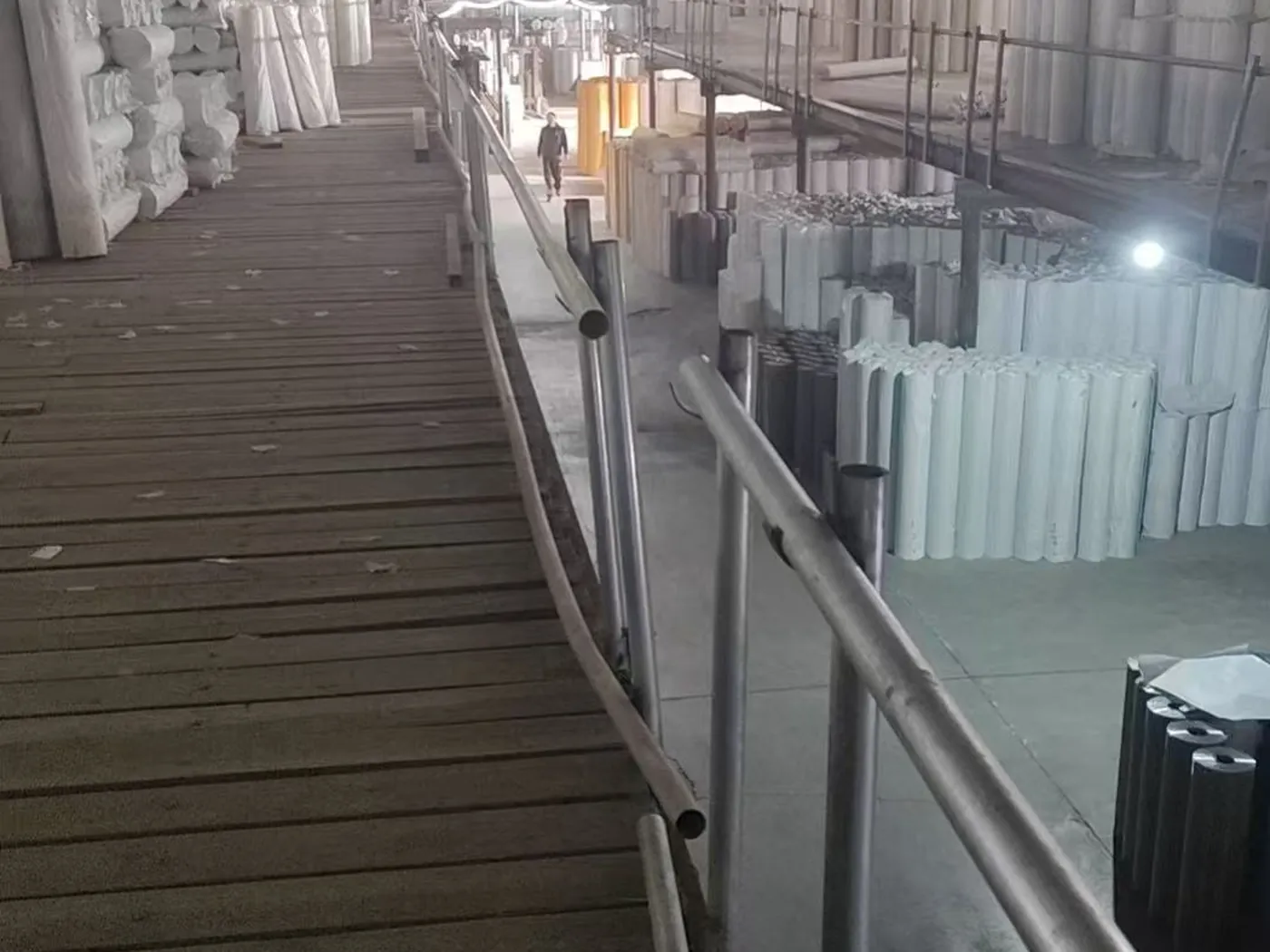
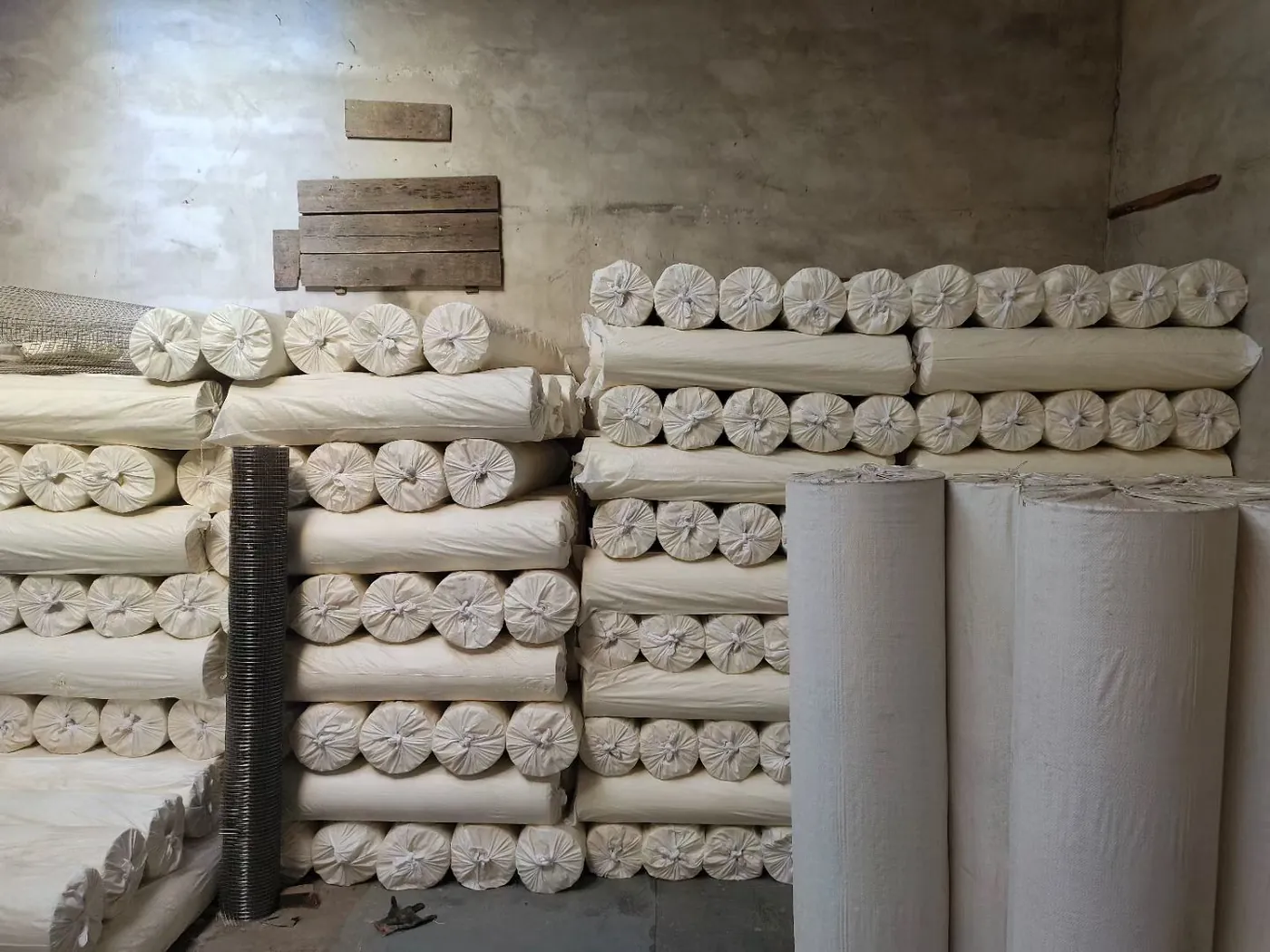
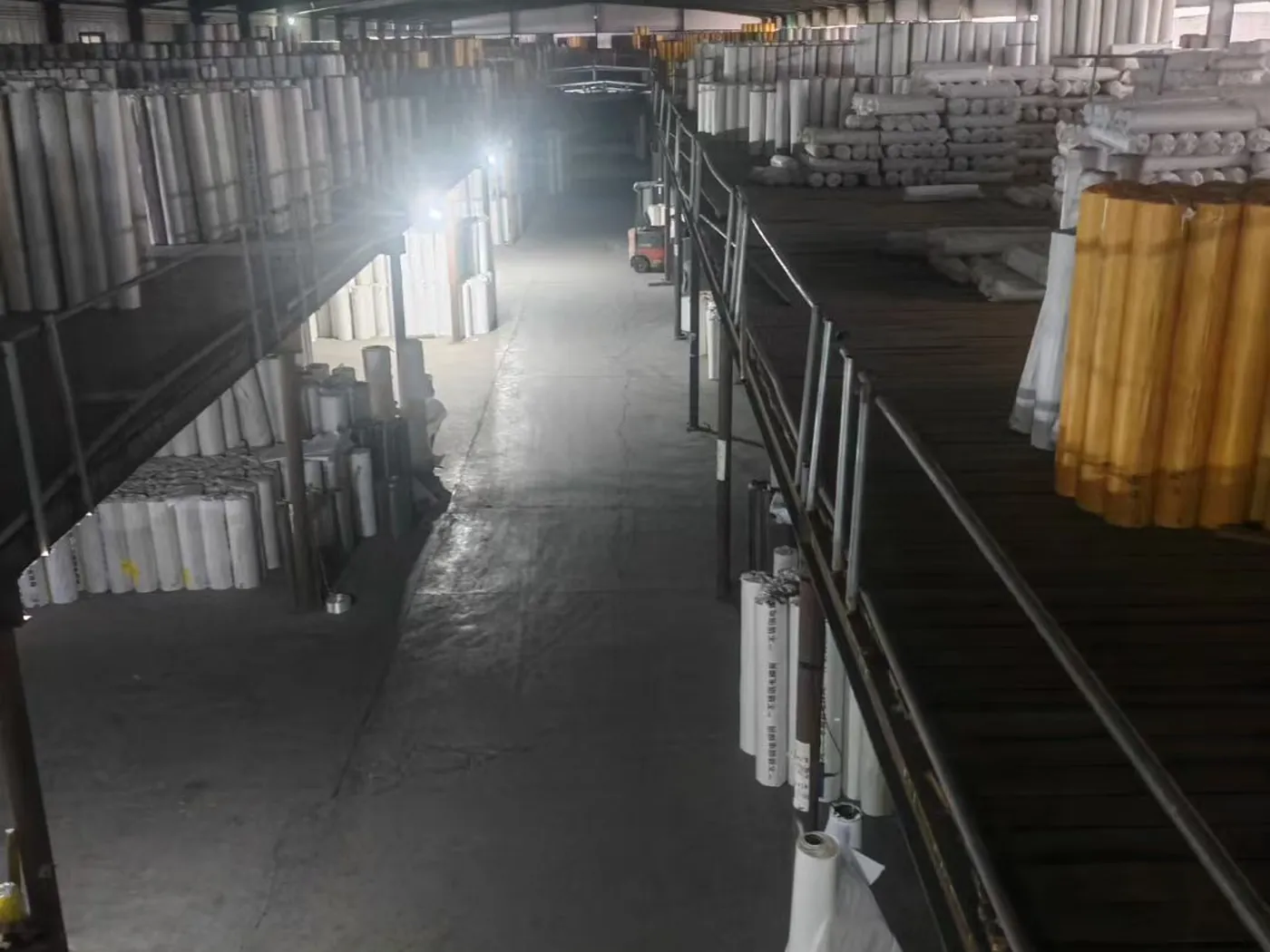
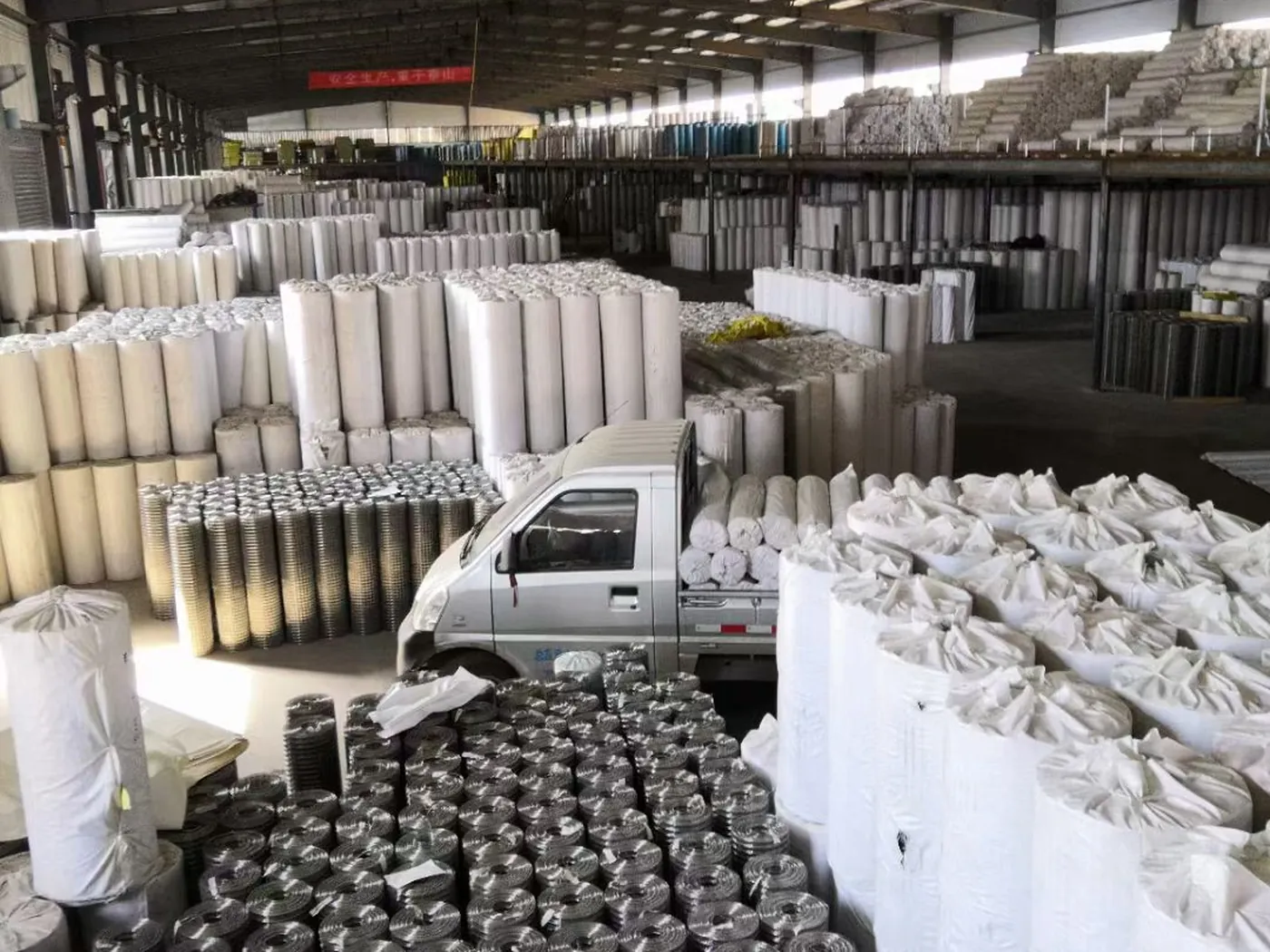
Inside the Anping Hand in Hand factory – chemical sourcing transparency
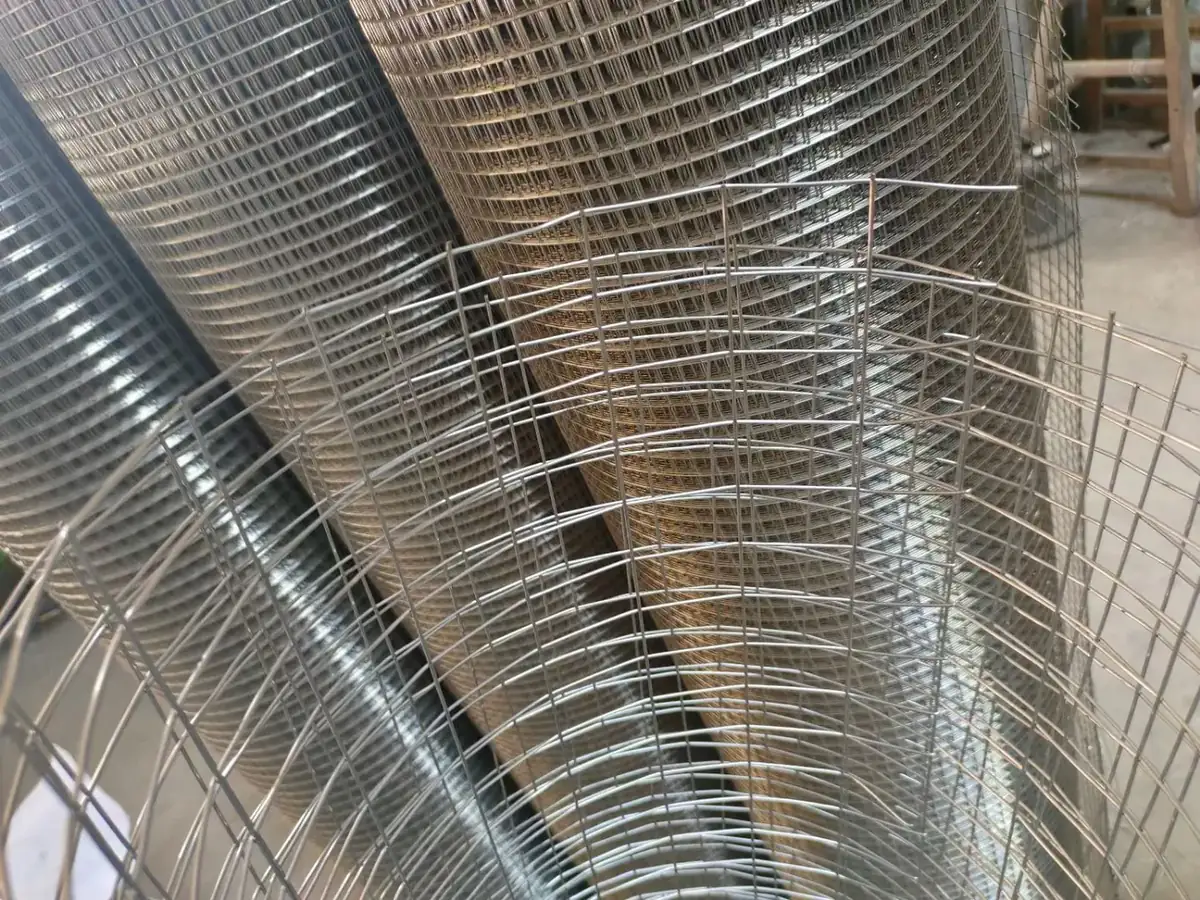
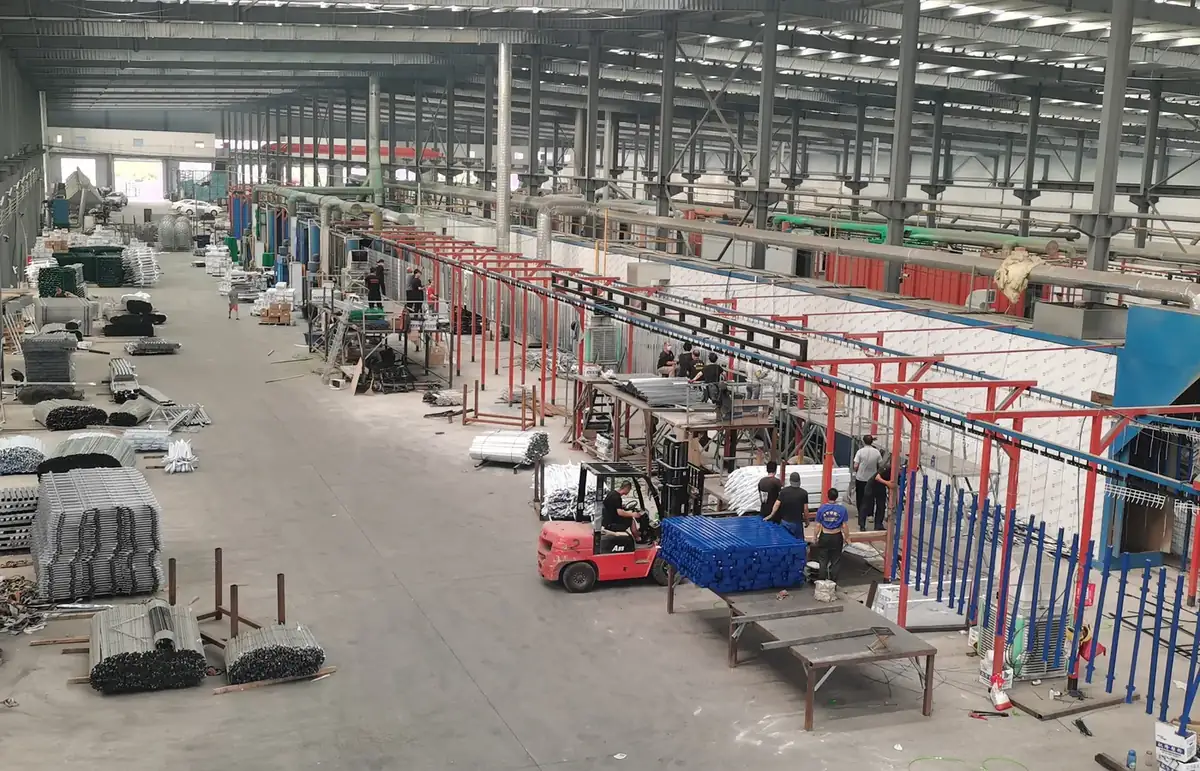
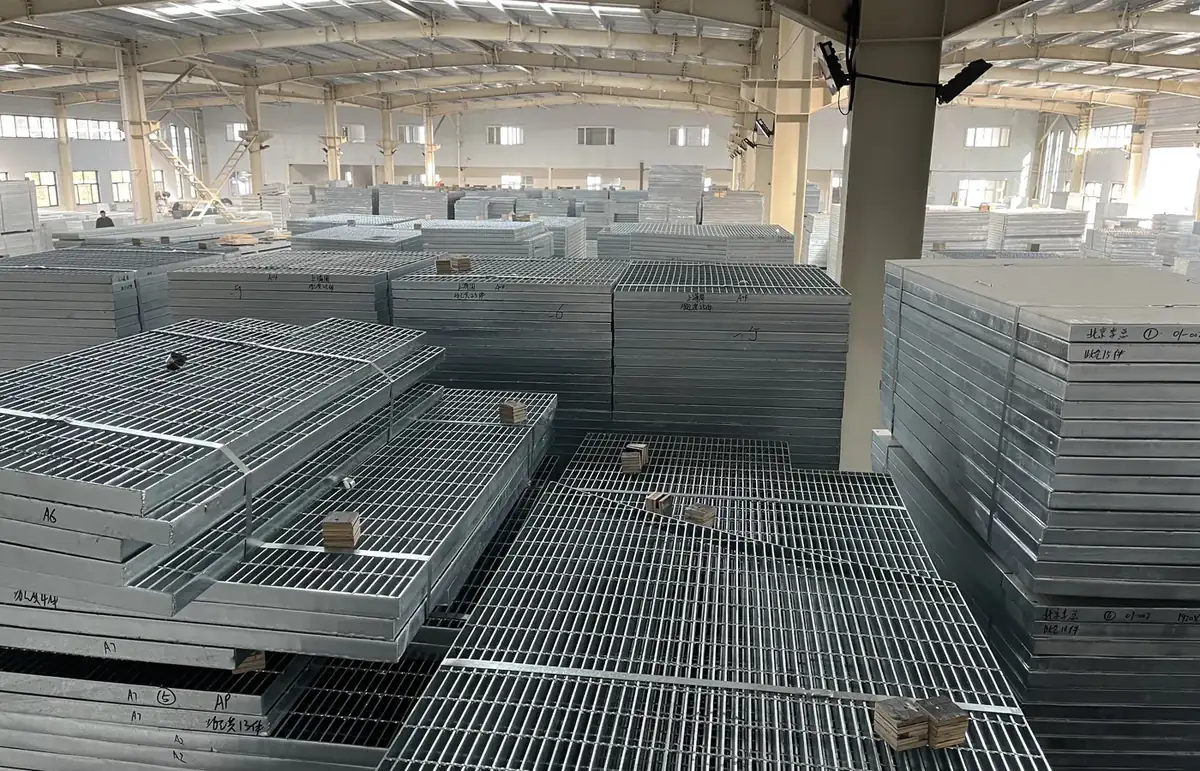
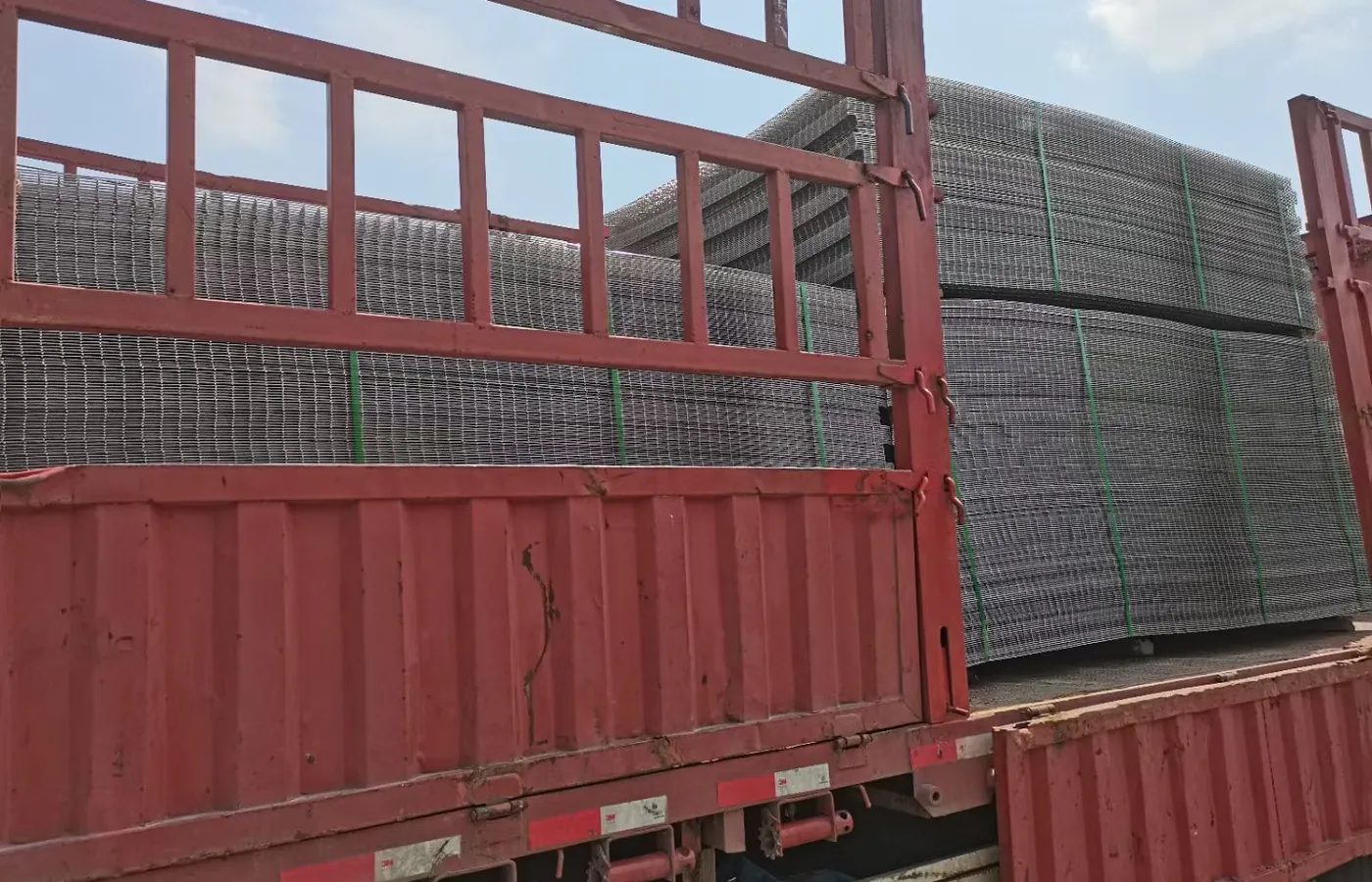
316/316L stainless steel mesh for chemical plant corrosion protection – welded mesh production line, panel QC, custom drawing-based fabrication and stockyard sourcing transparency at the Anping wire mesh factory. Buyers welcome to visit, video tour, or appoint SGS / BV / TUV third-party inspection. USCC 91131125MA7FT3EA0D.
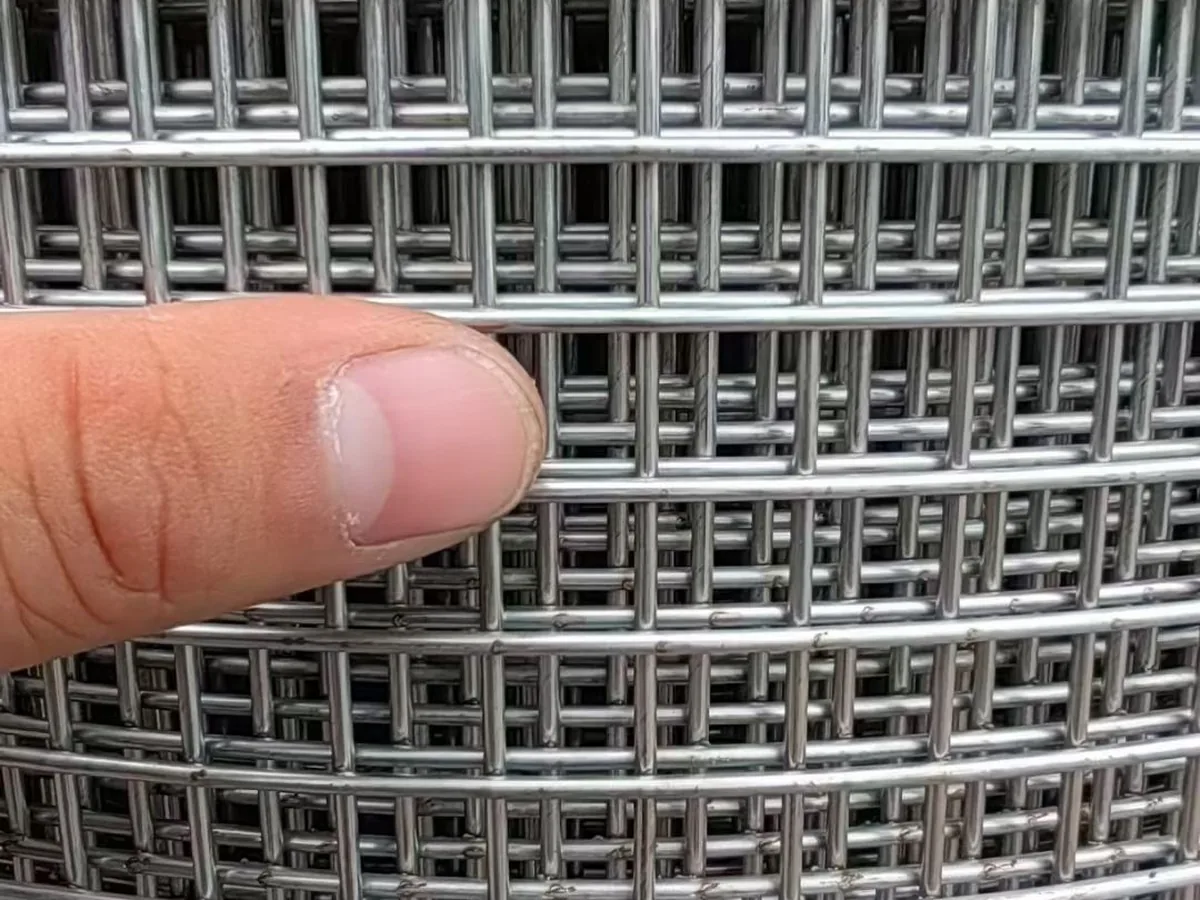
Why buyers can trust Anping Hand in Hand on this order
Anping County, Hebei Province is the national wire mesh production cluster of China with 4000+ wire mesh enterprises within 30 km. Our workshop, warehouse and shipping yard back every quotation with physical evidence buyers can verify on site, by video call, or via SGS / BV / TUV inspection.
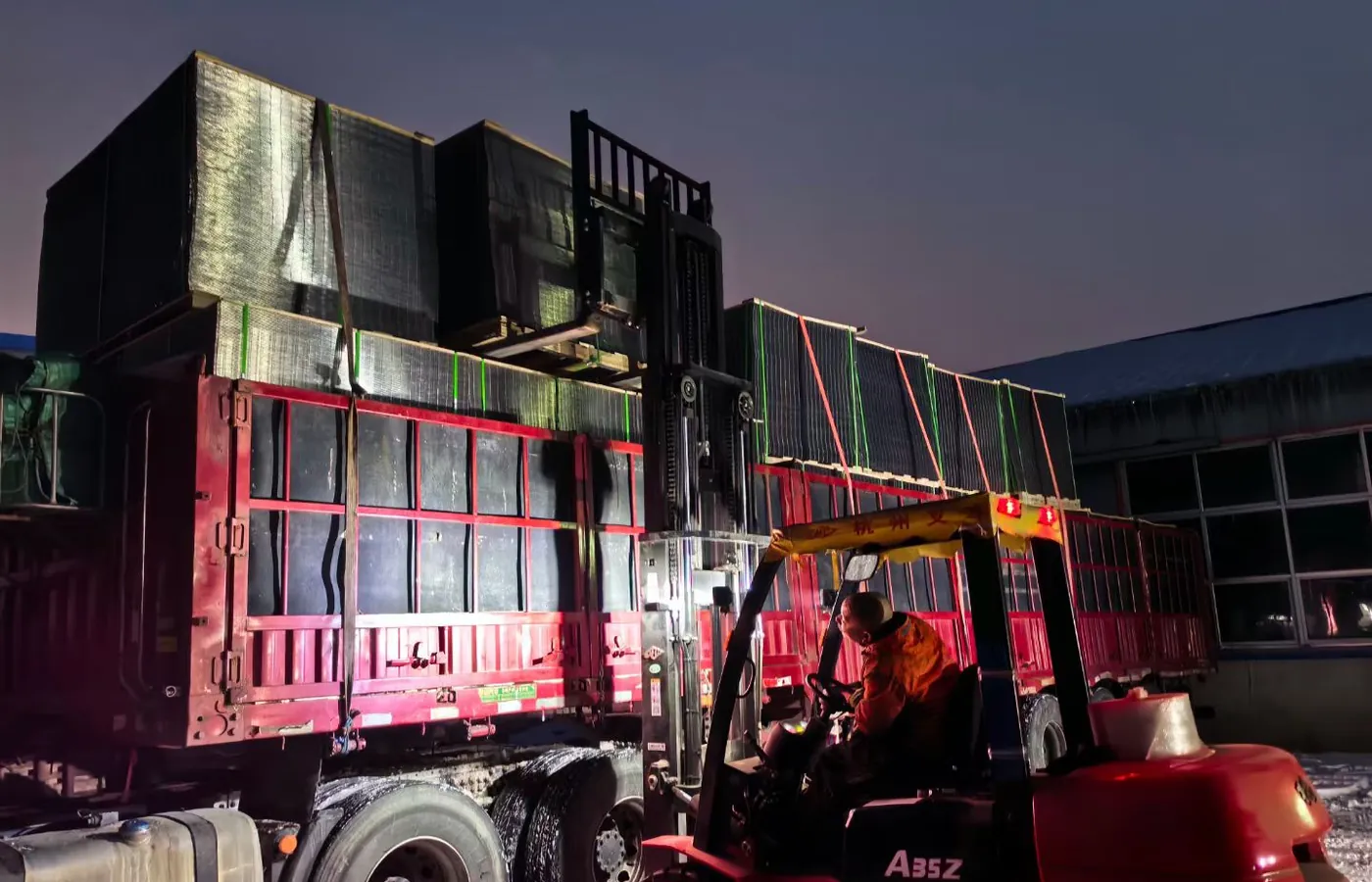
He Zhanbing
Senior Application Engineer | Anping Hand in Hand
5 years on the wire mesh and steel grating production line. Reviews drawings, opening specifications, panel size, finish and packing. Replies within one business day with binding pricing, weight per panel and lead time. Confirms grade selection (304 / 316 / 316L / duplex / 65Mn / Q235) against your application before quotation.
Verified legal entity and buyer-checkable records
Registered name (EN): Anping Hand in Hand Wire Mesh Products Co., Ltd.
Registered name (CN): 安平县手拉手丝网制品有限公司
Unified Social Credit Code (USCC): 91131125MA7FT3EA0D
Registered address: Anping County, Hebei Province, China
Geo coordinates: Lat 38.2314 / Lng 115.6253 (Anping wire mesh cluster)
Buyers may request a legal entity check, on-site visit appointment, video factory tour, or third-party (SGS / BV / TUV) inspection before payment. Quotations and contracts are issued under the registered legal entity above. Mill test certificate (MTC) traceable to wire batch number supplied by default; ASTM B117 salt-spray, ASTM E8 tensile and ISO 9227 reports supplied on request.
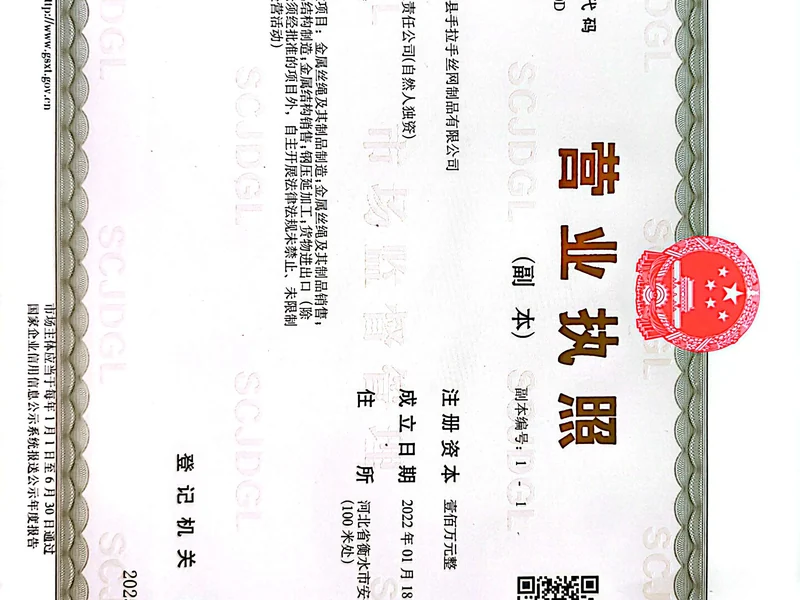
Business license (click to view full size)
Standards we work to: ASTM A123 / A153 (hot-dip galvanizing), ASTM A580 / A480 (stainless steel grade), ASTM E8 (tensile), ASTM B117 (salt-spray), ISO 9227 (NSS), ISO 9001 (quality management — in renewal cycle), EN 10204 type 3.1 (mill cert), EN 10088 (stainless), EN 1461 (galvanizing), EN 10218 (steel wire), AS 4687 / EN 12811 (construction fence), AS 1657 (walkway), ISO 13857 (machine guard), NACE MR0175 / ISO 15156 (sour service).
Get a same day chemical plant 316L mesh quote
Send the form below or WhatsApp +86 15075801841 for a same day reply. Drawings (2D / 3D / STEP) and salt-spray test requirements welcome.
Manufacturer evidence and quality control
The chemical plant protection wire mesh described on this page is manufactured at our Anping County, Hebei factory (USCC 91131125MA7FT3EA0D) by Anping Hand in Hand Wire Mesh Products Co., Ltd. Mill cert per EN 10204 type 3.1 issued for every order; type 3.2 third-party witness inspection (SGS / BV / TUV / Lloyds) on request.
Manufacturer: Anping Hand in Hand Wire Mesh Products Co., Ltd. (USCC 91131125MA7FT3EA0D) →
Compatible equipment and standards systems
Our wire mesh is produced to fit the dimensions, hook strip, framing standards, or test profiles published by the following equipment manufacturers and standards bodies. Send us your system or screen model number with your RFQ and we will quote against the corresponding spec.
Brand names are property of their respective owners; listed for product compatibility / standards identification only. Anping Hand in Hand Wire Mesh Products Co., Ltd. (USCC 91131125MA7FT3EA0D) is an independent wire mesh manufacturer and is not affiliated with these brands or systems.
What you receive with every shipment
Every container we ship arrives with a complete document set so your QA, customs broker, and goods-in team have nothing to chase.
- ✓Mill test certificate (EN 10204 type 3.1) — Heat number, chemical composition, mechanical properties — issued for every order
- ✓Dimensional QC measurement record — Per-product critical dimensions verified against your approved drawing — measured against your approved drawing
- ✓Packing list with PO traceability — Roll / panel / sheet count, m² per unit, total weight, container loading sequence
- ✓Bill of lading (FOB Tianjin Xingang or Qingdao) — For your customs broker and freight forwarder
- ✓Country of origin certificate — Form A / Form E available for AU / NZ / Korea / RCEP markets
- ✓Sample inspection cert from SGS / BV / TUV / Lloyds — Type 3.2 third-party witness inspection on request, paid by buyer
Want to see a redacted sample document set before you place an order? Message engineer He Zhanbing on WhatsApp and he will email you a desensitized type 3.1 mill cert and SGS test report within one working day.
Export-ready capability for first-time international buyers
We are an Anping County, Hebei manufacturer prepared to handle full international procurement documentation in English — mill cert, packing list, BoL, country-of-origin form, freight forwarder coordination from Tianjin Xingang or Qingdao. Whether this is your first import from China or your fiftieth, our process is the same.
New buyer? Request a 5 m sample roll first; we ship by FedEx / DHL with a redacted EN 10204 type 3.1 mill cert so your QA team can validate before placing a container order.