304 vs 316 vs 316L Stainless Steel Selection Guide for Wire Mesh
Authoritative chemistry, PREN, cost ratio and service-environment selection matrix for stainless wire mesh, welded mesh panel, crimped screen and perforated plate buyers. Written by Senior Application Engineer He Zhanbing at the Anping Hand in Hand wire mesh factory. Last reviewed 2026-06-21.
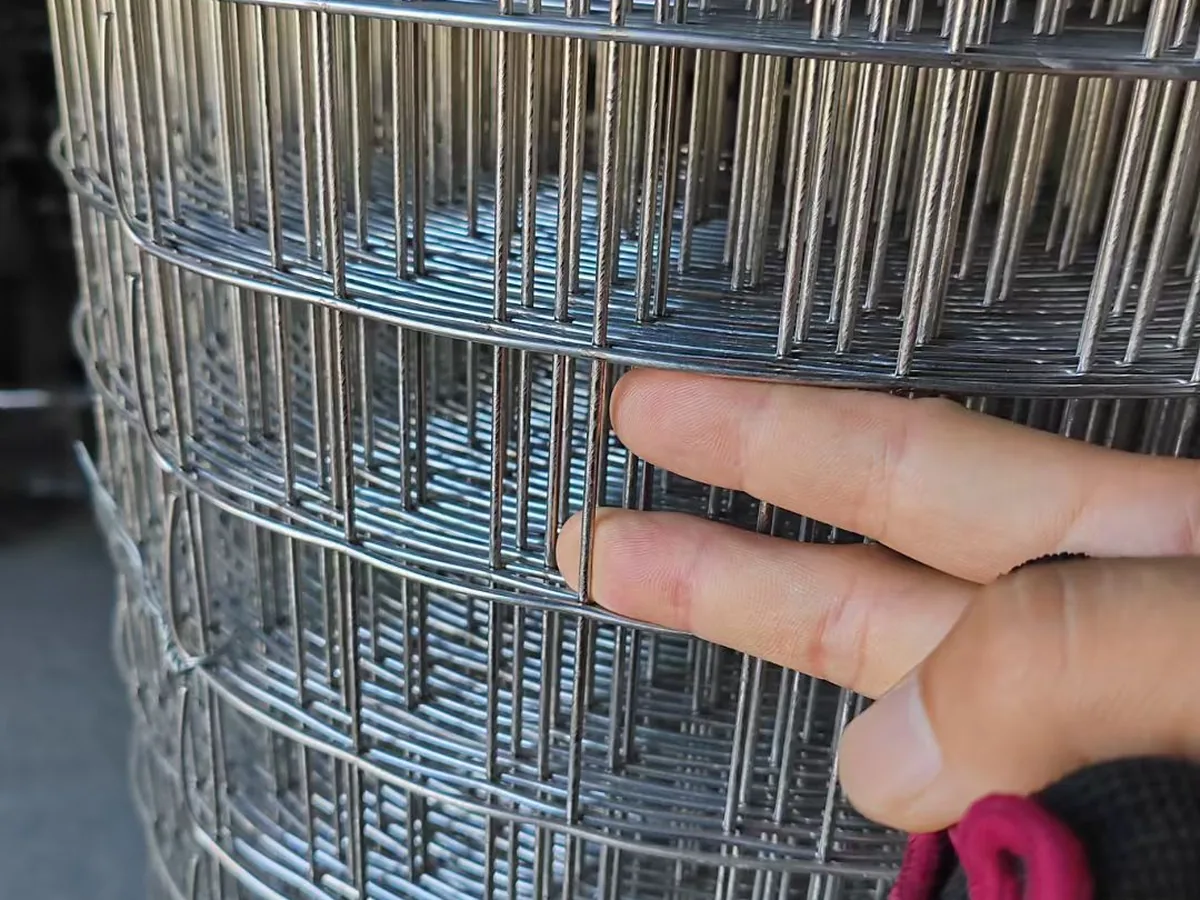
Quick answer: pick by service environment
If buyers want a one-line answer before reading the full guide, the practical decision rule for wire mesh, welded panel, crimped screen and perforated plate buyers is:
- 304 / 304L: indoor, food-grade, architectural decoration, freshwater filtration, balustrade infill. Cost baseline 1.0x.
- 316 / 316L: marine atmosphere, coastal harbor, pharma WFI, chloride process water, dairy CIP wash. Cost ratio 1.3-1.5x.
- Duplex 2205 or Super Duplex 2507: saline immersion, RO brine, FPSO, sour service. Cost ratio 1.8-2.5x.
- 904L / Hastelloy / Inconel: hot concentrated acid, HCl, FGD scrubber, urea plant. Cost ratio 5-12x.
If buyers are still unsure, send the operating temperature, contact medium (water composition, pH, chloride ppm), surface (immersed / atmosphere / splash zone), expected service life and panel size to Senior Application Engineer He Zhanbing. A binding grade recommendation, MTC sample and FOB price will be returned within 1 business day. Email RFQ | WhatsApp He Zhanbing
Chemical composition comparison (ASTM A240 / A580, EN 10088, JIS G4304)
All three grades are austenitic stainless steels. The key difference is molybdenum content and the carbon ceiling, which determines pitting resistance in chloride service and post-weld corrosion behavior. Anping Hand in Hand always issues mill test certificate (MTC, EN 10204 type 3.1) traceable to the wire and sheet batch number, so buyers can verify the chemistry per shipment.
| Element / Property | 304 / SUS304 | 304L | 316 / SUS316 | 316L |
|---|---|---|---|---|
| UNS | S30400 | S30403 | S31600 | S31603 |
| EN designation | 1.4301 | 1.4307 | 1.4401 | 1.4404 |
| JIS | SUS304 | SUS304L | SUS316 | SUS316L |
| Carbon C (max) | 0.080% | 0.030% | 0.080% | 0.030% |
| Chromium Cr | 18.0-20.0% | 18.0-20.0% | 16.0-18.0% | 16.0-18.0% |
| Nickel Ni | 8.0-10.5% | 8.0-12.0% | 10.0-14.0% | 10.0-14.0% |
| Molybdenum Mo | none | none | 2.0-3.0% | 2.0-3.0% |
| PREN (typical) | 18-20 | 18-20 | 24-27 | 24-27 |
| Tensile min (annealed) | 515 MPa | 485 MPa | 515 MPa | 485 MPa |
| Yield min (annealed) | 205 MPa | 170 MPa | 205 MPa | 170 MPa |
PREN (Pitting Resistance Equivalent Number) = Cr + 3.3 x Mo + 16 x N. Higher PREN = better pitting resistance in chloride. 304 PREN 18-20 is borderline for marine atmosphere; 316 PREN 24-27 is the practical chloride workhorse. Duplex 2205 PREN 34-38; Super Duplex 2507 PREN 40-43.
When to choose 304 / 304L
Type 304 (SUS304 / 1.4301) is the workhorse austenitic grade and accounts for about 50-60 percent of all stainless steel produced. For wire mesh, welded mesh, crimped screen and perforated plate, 304 is the right pick if the service stays away from chloride exposure and strong acid:
- Indoor air, low humidity, no chloride dust: equipment cabinets, server racks, conveyor enclosures, store fixture infill.
- Food contact (dry food and bakery): bakery cooling rack, grain screen, biscuit conveyor mesh, packing line guard.
- Architectural balustrade and facade: handrail infill, balcony cable mesh, lift shaft, escalator side panel, ceiling decoration.
- Freshwater filtration and treatment: drinking water filter, aquarium, swimming pool inlet screen (chlorinated but mild).
- Decorative and lighting industries: lamp shade, exhibit display, sculpture armature, retail display rack.
- Light agricultural and farm fence: animal cage, rabbit pen, chicken run, garden ornamental fence (atmosphere only, no salt mist).
304L (the L = low carbon, max 0.030%) is preferred when the wire mesh or welded panel will be welded after forming. The lower carbon reduces chromium carbide precipitation at the weld heat-affected zone (HAZ) and prevents intergranular corrosion – the so-called “weld decay” or “sensitization”. For welded mesh panels and welded wire grating bars at Anping Hand in Hand, 304L is the default choice whenever the buyer specifies post-weld pickling and passivation, or the panel will be exposed to moisture after welding.
Do not specify 304 if: the service includes seawater, salt fog (marine atmosphere), pool chlorine immersion, chloride process water above 200 ppm, or any contact with hydrochloric / hydrofluoric / hot sulfuric acid. 304 will pit and crack within months in these environments. Step up to 316 / 316L, or higher if conditions are severe.
Common 304 wire mesh products supplied by Anping Hand in Hand: 304 stainless steel welded mesh, 304 crimped wire mesh, 304 stainless steel mesh panels, 304 perforated metal sheet.
When to choose 316 / 316L
Type 316 (SUS316 / 1.4401) adds 2.0-3.0% molybdenum, which significantly improves resistance to pitting and crevice corrosion in chloride-bearing environments. PREN moves from 18-20 (304) to 24-27 (316). In practice, this means 316 is the right specification whenever the wire mesh, panel or perforated plate sees salt mist, marine atmosphere, chloride process water, or chemicals like dilute sulfuric and phosphoric acid at room temperature:
- Marine and coastal atmosphere: harbor handrail, ship deck mesh, fishing port screen, offshore platform stair tread, splash zone guard. See the dedicated marine and coastal wire mesh application page.
- Pharmaceutical and biotech (WFI grade): water for injection lines, clean room equipment screen, granulator dust extract grille, autoclave basket.
- Food and dairy CIP: cheese rack, milk strainer, brewery yeast harvest screen, sausage curing room ventilation grille (high humidity + acidic vapor).
- Chemical plant atmosphere: acid storage area walkway grating, sulfuric acid loading bay barrier, chlorine room ventilation, fertilizer plant equipment guard. See the chemical plant protection page.
- Pool and spa: pool drain grate cover (chlorinated water immersion), sauna ventilation screen, spa pump strainer.
- Outdoor architectural in marine cities: bridge handrail infill, coastal apartment balcony mesh, port museum facade.
316L is again the low-carbon (max 0.030%) variant used for any post-formation welding, including welded wire mesh panel, welded grating, fabricated chemical handling tray and welded screen drum. 316L is the dominant grade for export panel and roll product at Anping Hand in Hand because most of our overseas buyers specify panels for further on-site welding, bending or bolting.
316 has a chloride ceiling too. Hot chloride brine above 60 deg C, sea water immersion below 5 m, FPSO splash zone, RO plant brine reject and bleached pulp washing all exceed 316 PREN. If the design spec mentions stress corrosion cracking (SCC) risk, ASTM G36 boiling magnesium chloride or NACE MR0175 sour service, step up to duplex 2205 (PREN 34-38) or super duplex 2507 (PREN 40-43). Anping Hand in Hand stocks duplex wire and bar on request for marine and chemical projects.
Common 316 / 316L wire mesh products supplied by Anping Hand in Hand: 316 stainless welded mesh roll and panel, 316L stainless steel mesh panels, 316 perforated metal sheet, 316L crimped wire mesh.
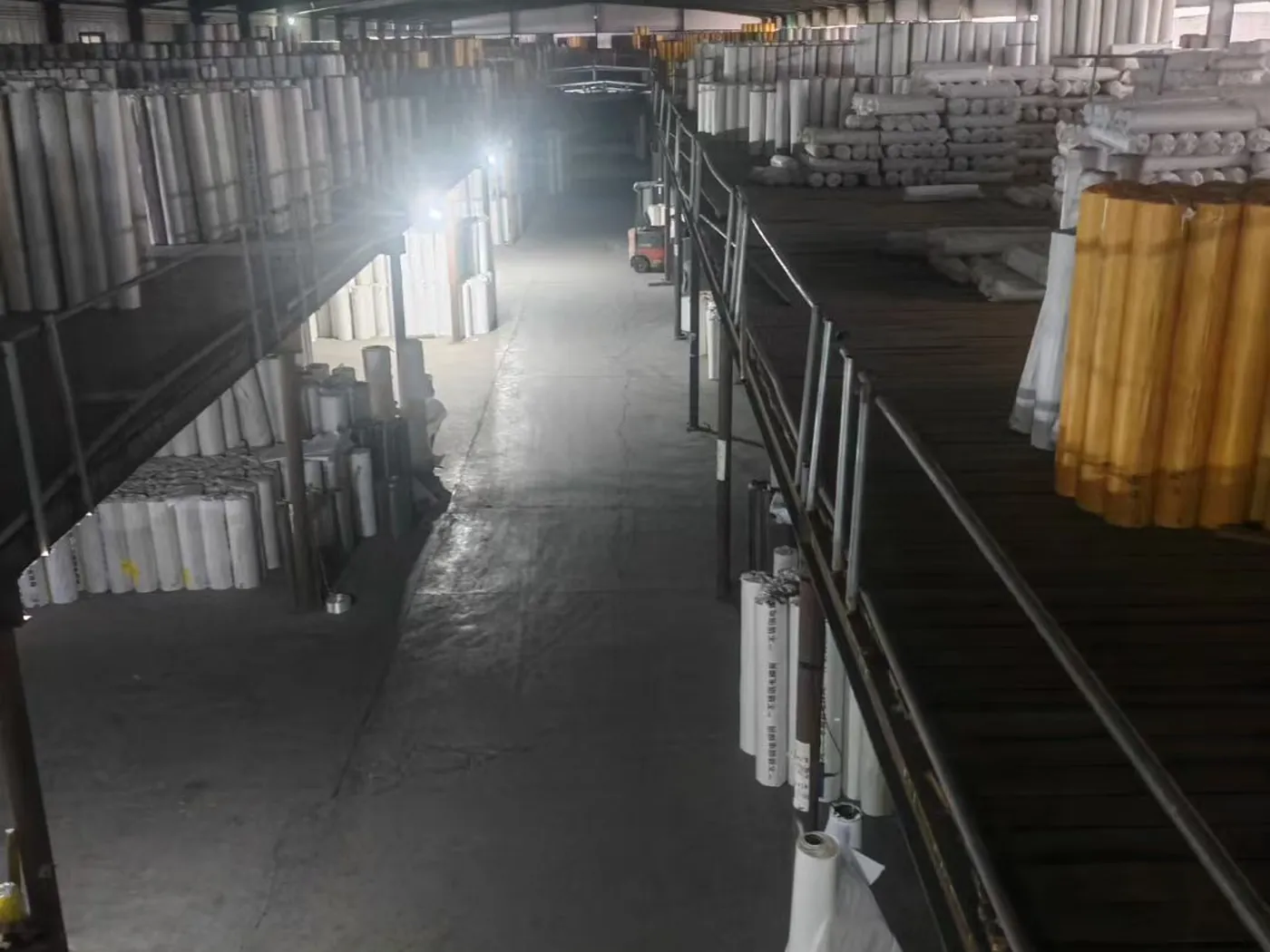
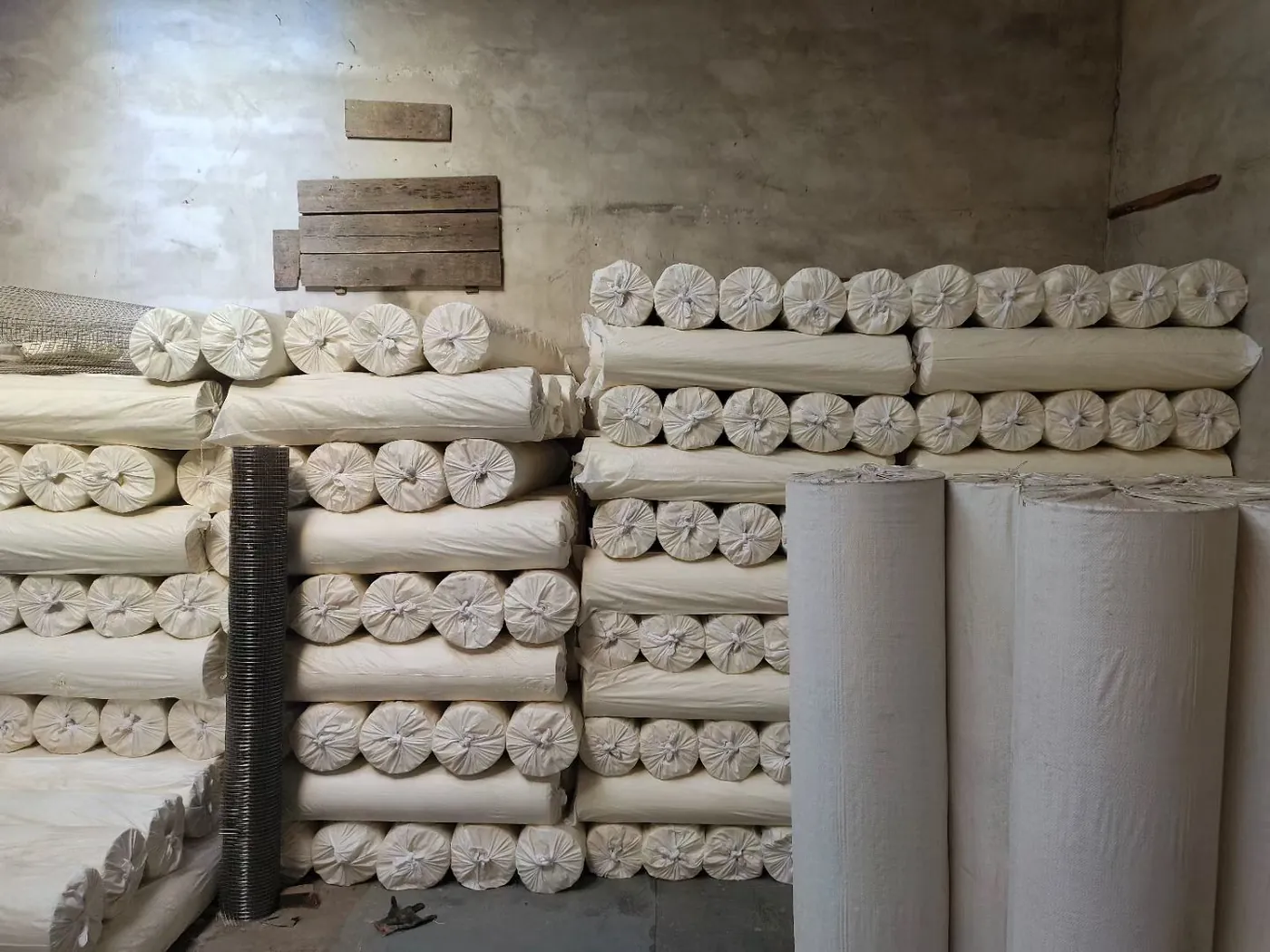
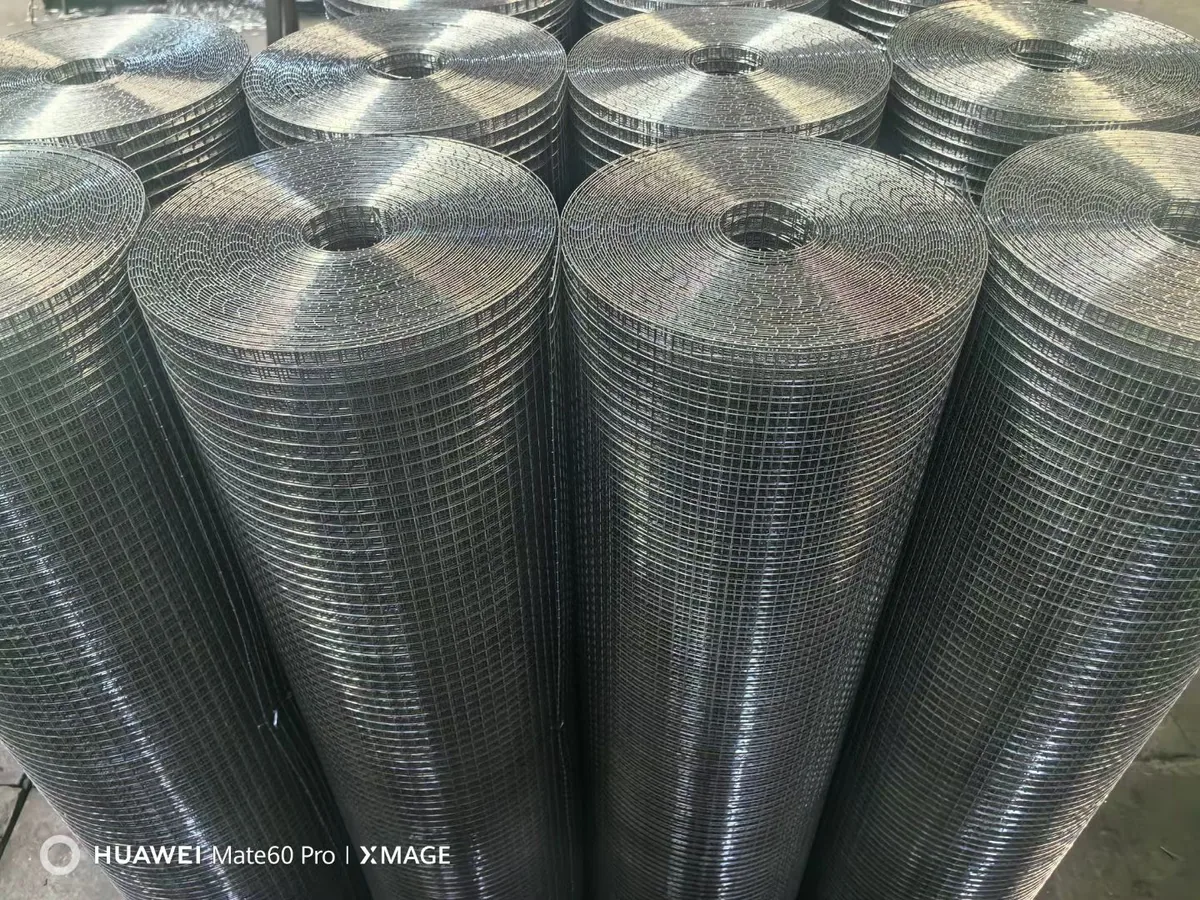
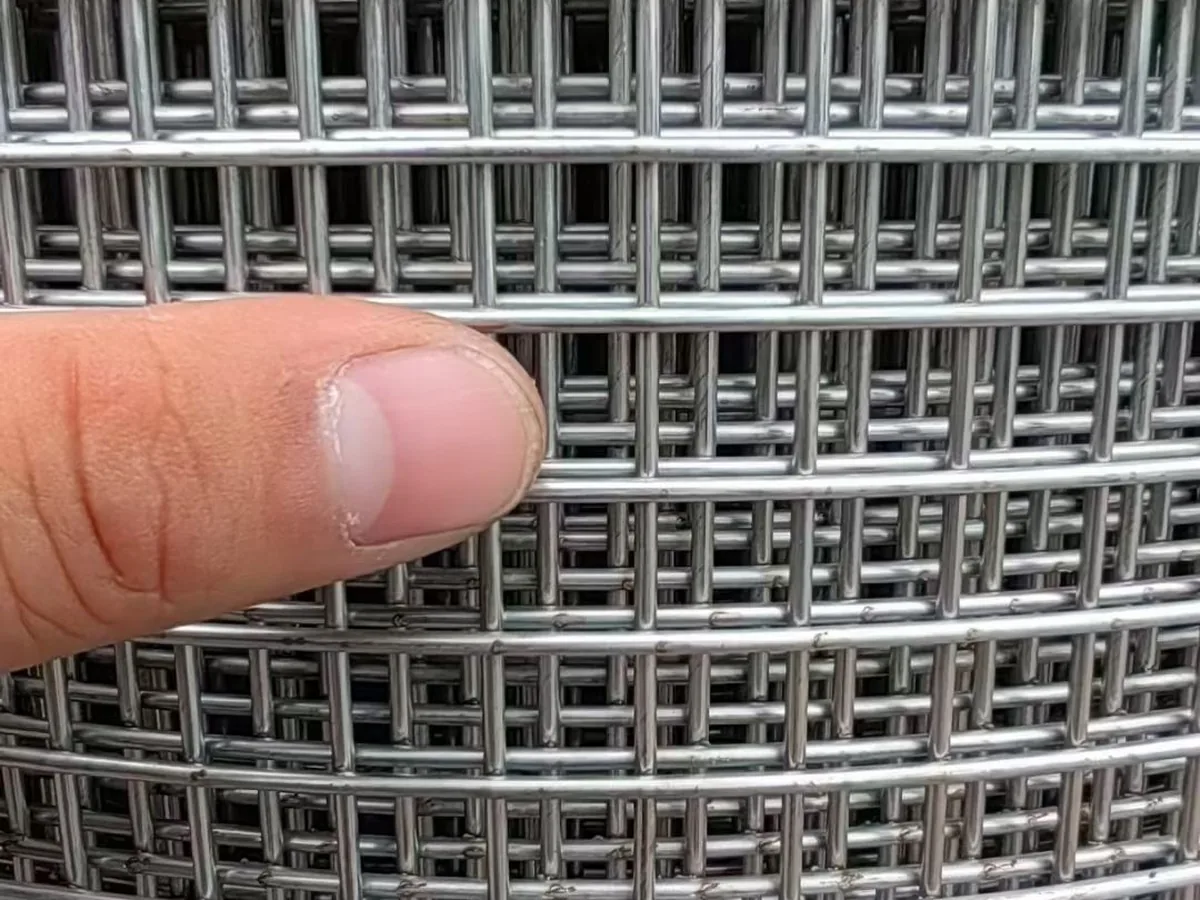
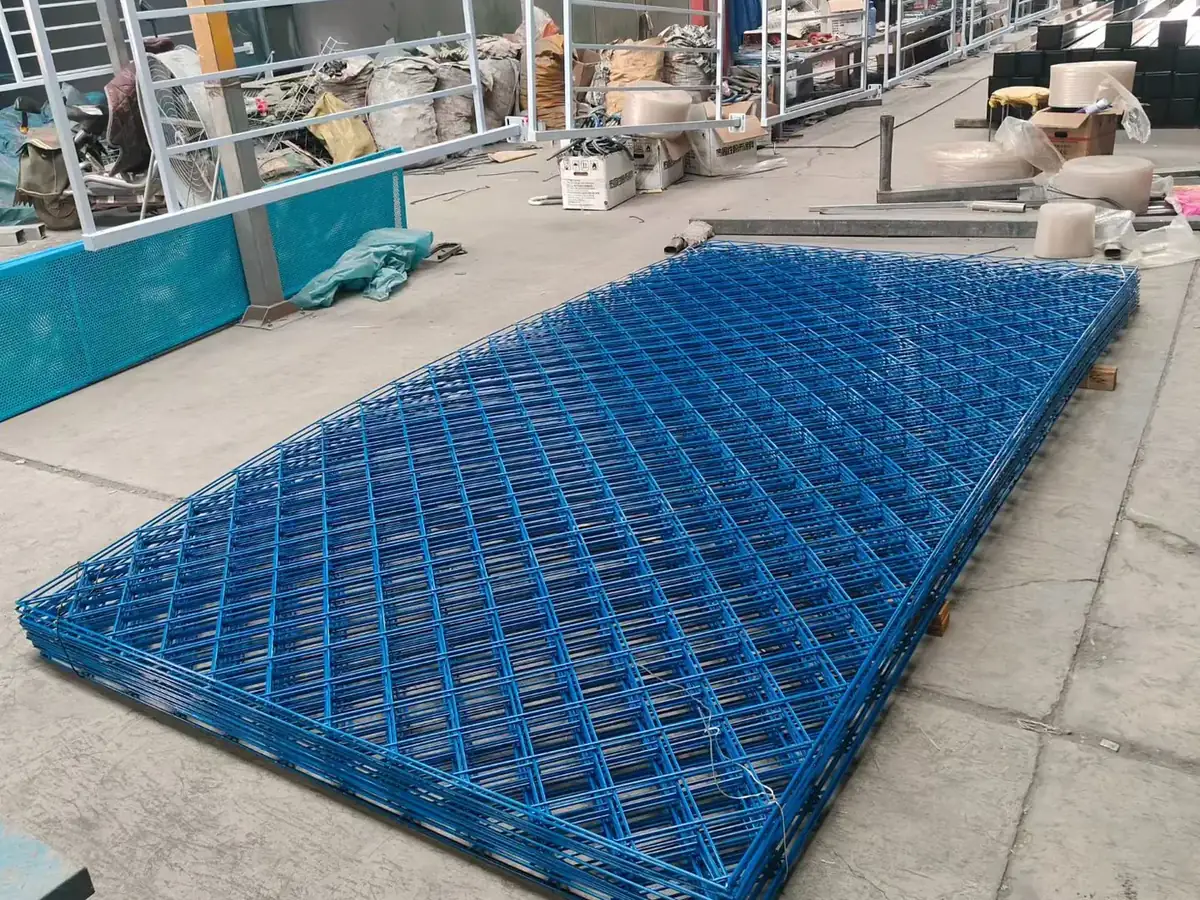
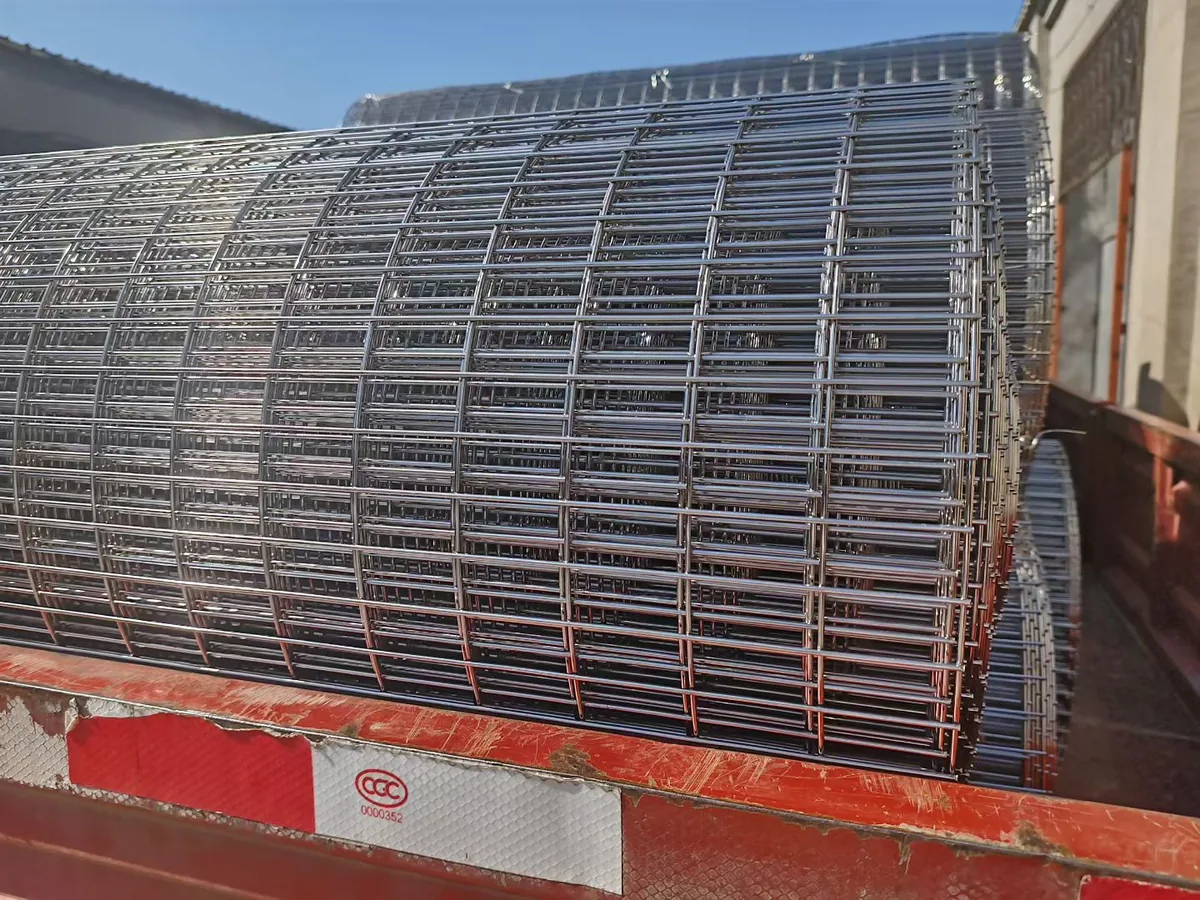
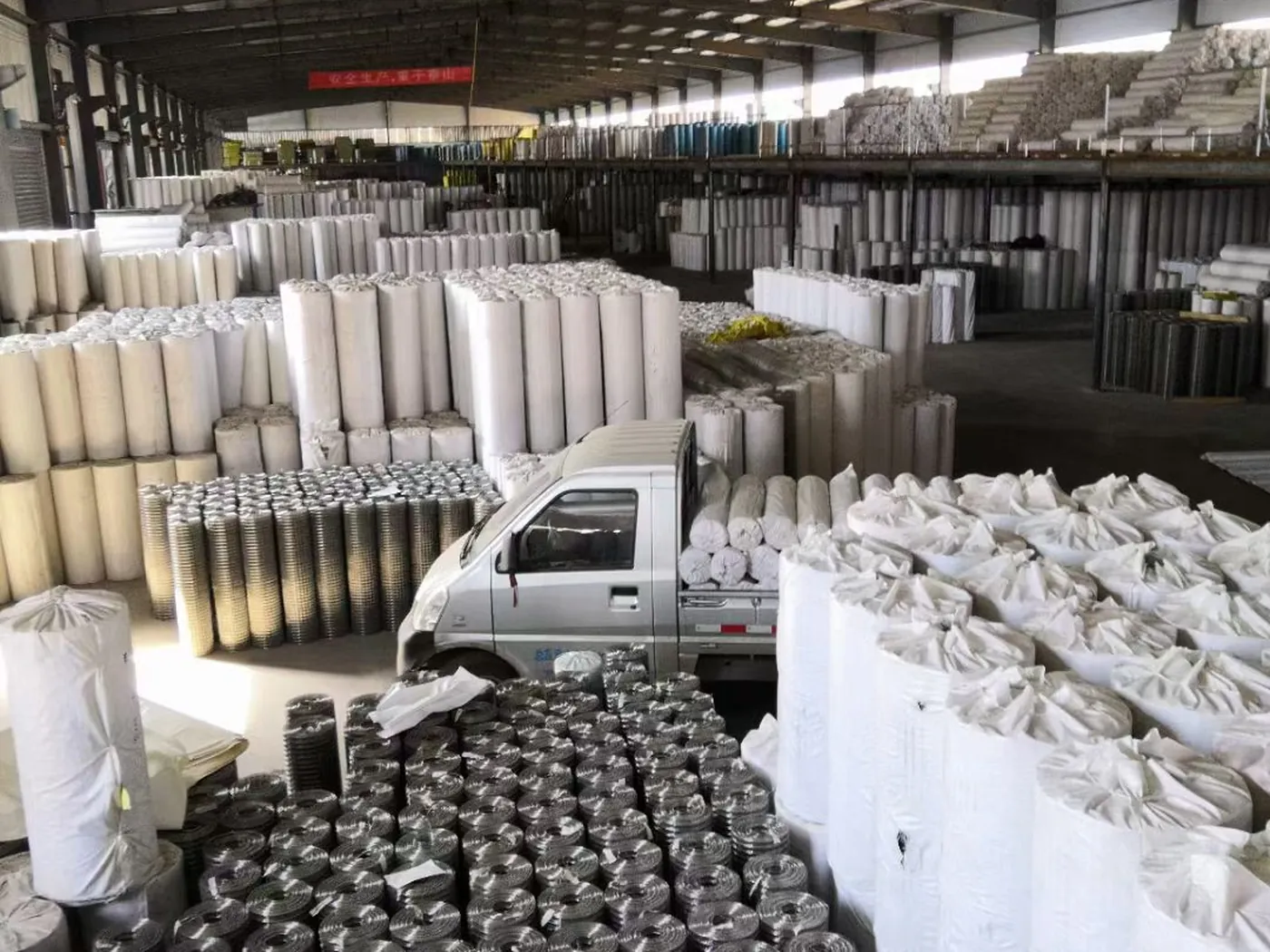
Stainless wire mesh production at the Anping Hand in Hand factory
Production workshop, QC inspection, finished panel stockyard and senior engineer review covering 304L, 316L, duplex 2205 and 65Mn wire mesh at the Anping Hand in Hand factory. Buyers welcome to video tour or appoint SGS / BV / TUV inspection before payment.
304L vs 316L: the welding context explained
The L grades (304L and 316L) are not “lower quality” – they are low-carbon variants specifically engineered to survive welding operations without intergranular corrosion. The carbon ceiling drops from 0.080% (standard) to 0.030% (L grade). This matters because of how stainless steel behaves at high temperature during welding:
- During welding the HAZ reaches 450-850 deg C (“sensitization zone”).
- If carbon is high enough (>0.030%), it combines with chromium to form chromium carbides (Cr23C6) along grain boundaries.
- The grain-boundary chromium depletion drops below the 10.5% passivation threshold.
- The depleted zones become anodic to the surrounding grains and corrode preferentially – intergranular corrosion, also called “weld decay”.
In wet, salt-bearing or mildly acidic service, this leads to weld-edge cracking, rusty lines along weld seams, and rapid panel failure even though the bulk material is still good. L grades essentially prevent the carbide reaction by removing the carbon, which keeps chromium in solid solution where it can passivate the surface.
Anping Hand in Hand practice: for welded mesh panel rolls, fabricated welded grating, large welded wire baskets and any welded mesh product that will ship over 30 mm thick or be exposed to wet service, we default to L grades (304L for 304 family, 316L for 316 family). This is built into the production line and is not a price upcharge in most cases. Mill test certificate per shipment confirms the L grade carbon ceiling.
For pre-formed crimped wire mesh and unwelded woven cloth where the wire is never reheated after weaving, standard 304 or 316 is fully acceptable – the wire is in cold-drawn condition and never enters the sensitization temperature window. Buyers procuring crimped wire mesh can specify either grade without the L premium concern, while welded mesh panel buyers should default to L grades unless the budget is tight and the service is dry indoor.
Service environment selection matrix
Match the buyer environment to the recommended grade using the following matrix. Anping Hand in Hand will confirm the recommendation in writing on the quotation, traceable to the MTC batch issued with the shipment:
| Service environment | Recommended grade | Notes / standards |
|---|---|---|
| Indoor dry, residential, office | 304 | Architectural finish; ASTM A580 |
| Welded panel for indoor service | 304L | EN 10088-2 1.4307; pickling after welding recommended |
| Food contact, dry food, beverage line | 304 / 304L | FDA-grade; 2B or 2D finish; passivate after welding |
| Pharma WFI, ASME BPE, biotech CIP | 316L | ASME BPE-2019; electropolish; Ra < 0.5 micron |
| Coastal atmosphere, < 1 km from sea | 316 / 316L | ASTM A580; ASTM B117 salt-spray 500 hr passed |
| Harbor splash zone, ship deck | 316L or duplex 2205 | NACE MR0175; consider duplex if SCC risk |
| Sea water immersion (continuous) | Duplex 2205 or Super Duplex 2507 | 316L will pit within 1-3 years; PREN ≥ 34 |
| RO plant brine reject, FPSO produced water | Super Duplex 2507 or 904L | High chloride + temperature + pressure |
| Pool drain grate, spa equipment | 316L | Chlorinated water immersion |
| Chemical plant walkway, splash protection | 316L | Cold dilute acid; switch to duplex for hot acid |
| Mining screen, dry ore, abrasion | 65Mn spring or 304 | Abrasion-priority; see mining application |
| Construction temporary fence outdoor | Galvanized carbon, not stainless | Hot-dip galvanized ASTM A123; see construction fence |
| Municipal drainage cover outdoor | Galvanized carbon or 316L | Galvanized for inland; 316L for coastal city; see drainage |
| Factory machine guard (atmosphere) | 304 indoor / 316L wet | ISO 13857 safety distance; see equipment guard |
How to procure the right grade from Anping Hand in Hand
The procurement workflow that protects buyer cost and avoids field failure follows five steps. Each step is a verification gate that Anping Hand in Hand walks through with you before the PI is issued.
- Document the service environment. Operating temperature, contact medium (water composition, chloride ppm, pH), exposure type (atmosphere / splash / immersion / wash), expected service life, panel size and quantity. A two-line description is enough for a first quotation.
- Confirm the grade with He Zhanbing. The senior application engineer at Anping Hand in Hand reviews the spec and replies with a grade recommendation (304L / 316L / duplex 2205), the rationale and an alternative if cost is a constraint. Reply within one business day.
- Request a mill test certificate (MTC) sample. Anping Hand in Hand sends a representative MTC (EN 10204 type 3.1) from a recent shipment so the buyer can verify chromium, nickel, molybdenum, carbon and PREN compliance against the spec.
- Specify post-treatment if needed. 2B mill finish for general use; pickled and passivated for welded panel exposed to wet service; electropolish for pharma; bead-blast for architectural. Anping Hand in Hand can issue passivation certificate per ASTM A967.
- Plan inspection and shipping. SGS / BV / TUV third-party inspection at factory before payment is supported. Container loading photos are sent before B/L. Shipment 12-22 days after PI signed for stock specs, 25-35 days for custom shape or duplex.
For the full RFQ checklist used by senior buyers, see the dedicated wire mesh buying guide. For grade-specific application guidance, see the wire mesh material guide.
Get a quote on the right grade in 1 business day
Send the service environment and panel size to Senior Application Engineer He Zhanbing. Binding grade recommendation, FOB price, MTC sample (EN 10204 type 3.1), ASTM B117 salt-spray report and ISO 9001 process documents supplied on request before payment. SGS / BV / TUV third-party inspection welcome.
Anping Hand in Hand Wire Mesh Products Co., Ltd. (USCC 91131125MA7FT3EA0D) – Anping County, Hebei Province, China. Wire mesh, welded mesh, crimped screen, perforated plate, steel grating, construction fence.
Who wrote this guide
He Zhanbing
Senior Application Engineer | Anping Hand in Hand Wire Mesh Products Co., Ltd.
5 years on the wire mesh and steel grating production line in Anping County, the national wire mesh manufacturing cluster of China. Reviews drawings, opening specs, panel size, finish and packing for marine, chemical, pharma, mining, food, drainage and construction projects. Confirms grade selection (304 / 304L / 316 / 316L / duplex 2205 / 65Mn / Q235) against MTC traceable to each shipment.
Sources and standards referenced: ASTM A240 (stainless plate / sheet / strip), ASTM A580 (stainless wire), ASTM B117 (salt-spray), ASTM A967 (passivation), EN 10088 (stainless designation), EN 10204 (mill test certificate type 3.1), ISO 9001 (quality management), ISO 9227 (NSS), JIS G4304 (stainless plate), NACE MR0175 / ISO 15156 (sour service), ASME BPE-2019 (bioprocessing equipment). All composition values per ASTM A240 and EN 10088-2.
Frequently asked questions about 304, 316 and 316L stainless wire mesh
Is 316L always better than 304L?
No – 316L is only better in chloride and acid service. In clean indoor air or dry food contact, 304L performs identically to 316L at 30 percent lower cost. Use 316L only when the service environment justifies it: marine atmosphere, chloride process water above 200 ppm, dilute acid splash, pharma WFI, or coastal architectural where premature pitting would be a warranty headache. For every other application, 304L is the smart pick.
What is the price difference between 304L and 316L wire mesh in 2026?
The price ratio at the Anping factory level is roughly 304L 1.0x, 316L 1.3-1.5x depending on nickel and molybdenum spot price. The premium is driven by 10-14 percent nickel and 2-3 percent molybdenum content in 316L vs only 8-12 percent nickel and no Mo in 304L. For a 1.5 m x 30 m welded mesh roll at 1.2 mm wire, the FOB Tianjin price difference is approximately Send RFQ for current quote. Container quantity of 304L vs 316L typically differs by Send RFQ for current quote.
Can I use 316 instead of 316L for welded mesh panel?
Technically yes for short-service indoor product. However for any panel that will be welded after forming and then exposed to wet, marine or chemical service, 316L is the safer choice because the 0.030 percent carbon ceiling prevents chromium carbide precipitation at the weld HAZ. Anping Hand in Hand defaults to 316L for export welded mesh and panel product unless the buyer explicitly accepts 316 for cost reasons and the service is dry.
Does Anping Hand in Hand stock 304L and 316L wire and panels?
Yes. Common diameters from 0.5 mm to 6.0 mm in 304L and 316L are stocked at the Anping facility for fast turnaround. Custom diameters (7-12 mm) and large opening (above 100 mm) custom panel are produced on order with 15-25 day lead time. For duplex 2205 and super duplex 2507, lead time is 30-45 days from raw wire procurement to finished panel. Mill test certificate per batch is mandatory on every shipment.
How do I verify the grade I received is really 304L / 316L?
Three layers of verification: (1) Mill test certificate (MTC, EN 10204 type 3.1) lists chemistry of each wire batch – check Mo 2.0-3.0 percent for 316 family, none for 304 family, and C max 0.030 for L grades. (2) PMI portable XRF gun test at receiving inspection takes 5-10 seconds per panel and is non-destructive. (3) Third-party SGS / BV / TUV inspection at the Anping factory before payment – the inspector pulls samples for lab analysis. We support all three on every export shipment.
What is PREN and how do I calculate it?
PREN (Pitting Resistance Equivalent Number) is the industry-standard ranking for chloride pitting resistance. The formula is: PREN = Cr + 3.3 x Mo + 16 x N, where the elements are weight percentages. For typical 304: 18 + 0 + 16×0.05 = 18.8. For typical 316L: 17 + 3.3×2.1 + 16×0.05 = 24.8. PREN above 24 is generally accepted for moderate chloride atmosphere; PREN above 34 (duplex 2205) is needed for sea water immersion; PREN above 40 (super duplex 2507) for FPSO and aggressive saline conditions.
Will 316L work for sea water immersion?
No, 316L will pit and develop crevice corrosion in continuous sea water immersion within 1-3 years, especially in stagnant zones or at higher temperature. For sea water immersion (below 5 m, harbor pier, FPSO splash zone, RO brine reject) you need duplex 2205 (PREN 34-38) or super duplex 2507 (PREN 40-43). For periodic splash and marine atmosphere only, 316L is sufficient. Send the immersion depth, temperature and oxygen condition to He Zhanbing for a confirmed recommendation.
Which finish should I specify on 304L / 316L wire mesh?
Pickled and passivated finish is standard for export welded mesh – removes weld scale, restores chromium oxide passive layer. 2B mill finish for general use. Bright annealed (BA) for decorative architectural. Bead-blast for marine architectural. Electropolish (Ra below 0.5 micron) for pharma WFI per ASME BPE-2019. Specify the finish on the PI; Anping Hand in Hand issues passivation certificate per ASTM A967 when requested.
Engineering reference: see our steel grating load capacity and span selection guide for ANSI/NAAMM MBG 531 load tables, span formulas and a 5-step procurement workflow.